Jennifer Van Eyk is bringing precision medicine closer to reality by developing more robust and scalable methods for quantifying the differences between individuals, even down to the single cell level.
“Analytical chemistry and effective LC separation of peptides is the cornerstone of large-scale proteomics, where we need to precisely quantify the proteome in billions of cells,” she says. “Only with this can the impact of cell heterogeneity in disease, and in response to a therapeutic, be addressed.”
Ahead of ISC 2026, we spoke with Van Eyk about the analytical rigor required to make single-cell proteomics possible, why LC-MS workflows must become more robust and accessible, and how proteome heterogeneity could help unlock more individualized approaches to diagnosis and treatment, particularly in women’s heart health.
Meet the Expert
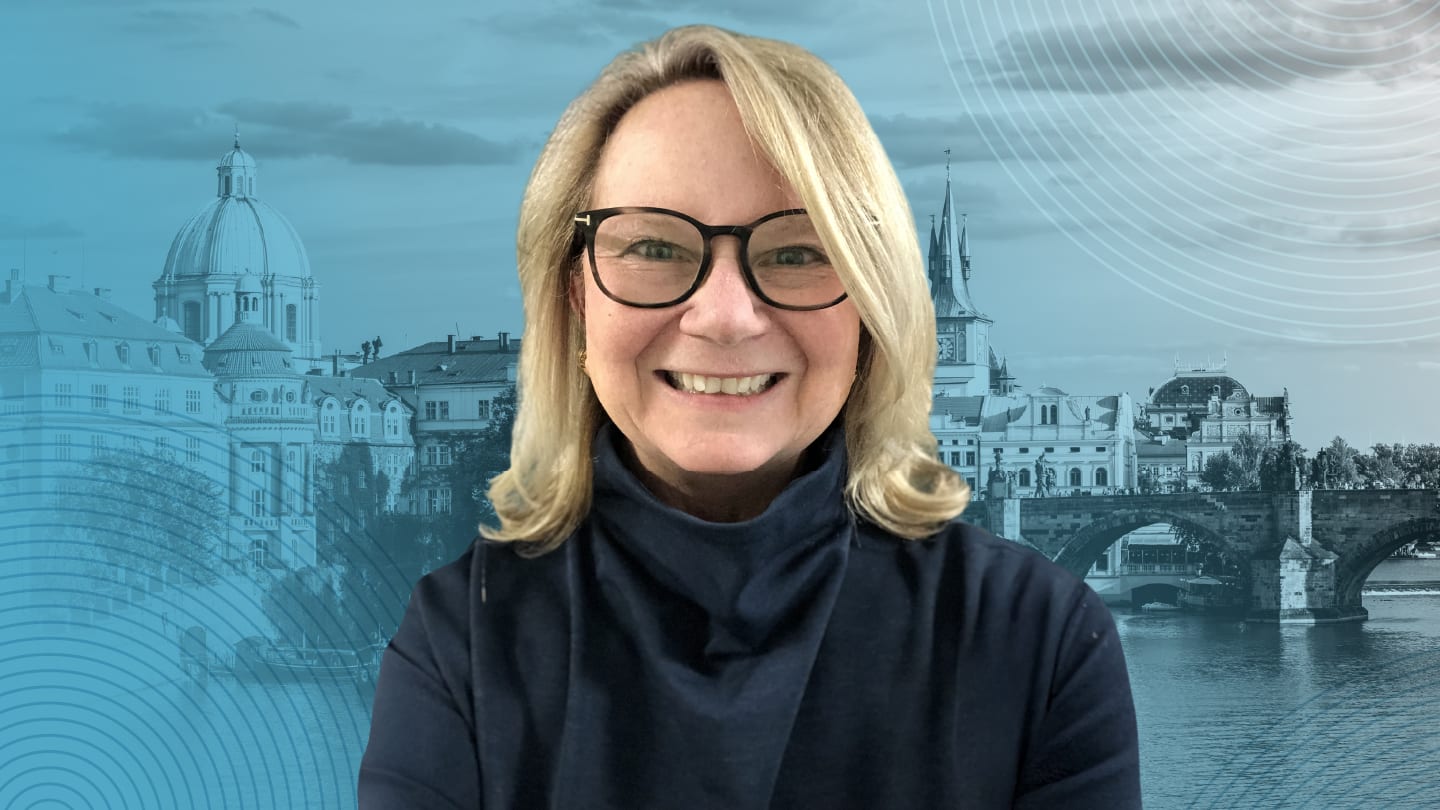
I am a Professor of Cardiology and Pathology at Cedars-Sinai Medical Center, Director of the inaugural Advance Clinical Biosystems Institute, and Director of the Basic Science Research in the Barbra Streisand Woman’s Hearth Center. I started as faculty in Canada at Queens University and then was recruited to Johns Hopkins University in Baltimore, USA. Our group is an international leader in the area of clinical proteomics.
Please describe the focus of your work
My group focuses on facilitating the individualization of health care. The foundation has been the development of scalable LC-MS technical pipelines for de novo discovery and larger scale quantitative mass spectrometry methods and then applying these to clinical questions for either individualized therapies or personalized diagnostics.
For example, we have developed an automated workflow that allows us to move easily from discovery proteomics and the identification of candidate biomarkers to targeted assays that are required to refine the protein panel and are suitable for large population or biobank cohorts.
In addition, a modified version of these workflows is being applied to cell-based drug trials or for single cell studies where large numbers of samples/cells are analyzed. The goal here is the individualization of the therapy.
All of this is built on robust, reproducible, and scalable workflows that are easy to implement and to provide QC measures at each step, allowing us to assess analytical performance.
Which areas are you focusing on currently – and why?
We work on several disease areas, but our group’s primary focus is women’s heart health. Cardiac diseases remain the number one cause of mortality worldwide; and women’s heart disease differs from men’s. These differences are understudied (and are sometimes ignored especially in young women).
What will your ISC 2026 presentation cover?
In my talk at ISC, I’ll be highlighting some of our workflows, with LC being key, and how we’ve used them to address proteome heterogeneity in the heart at the single cell level. In particular, I will discuss how, with exceptional technical rigor, we have been able to define unexpected cellular heterogeneity and provide examples of shocking new biology, and why this matters.
What has made single-cell proteomics possible?
Single-cell proteomics has been built on the foundation of analytical chemistry, which has allowed the field to build out expertise in sample preparation, LC peptide separation, MS data acquisition and data search and analysis. Only in the last few years has it been feasible to take the smallest of samples (a single cell) and obtain quantitative proteomic data. It is a truly remarkable technical feat. This means that each step must be analytically perfect over 1,000s of cells.
To achieve this, at least in part, we have developed a stable and precise single-cell LC-MS workflow based on high-flow, dual trap, with a single analytical column system, which can achieve 96 samples per day. We have coupled this with a novel parallel sample preparation method on demand within the autosampler, reducing sample loss and better matching throughput with the LC-MS.
How can proteomics support precision medicine?
Being able to accurately quantify heterogeneity is essential to measure the heterogeneity between individuals, which is the concept that underlies precision medicine. Specifically, an individual’s omic signature will provide a physician with clinically actionable diagnosis and a subsequent mechanistic therapeutic route that is appropriate for a particular person. This concept is based on the idea of pathological heterogeneity and recognizes the impact of differences in the health state of individuals. Importantly, with application of single cell proteomics, we now know that this heterogeneity also lies within a single cell type and can dictate the cellular heterogeneity within an organ.
For proteomics to impact precision medicine, be it biomarkers or therapeutics, the field needs to be at a stage where analytical rigor is routine. This means LC-MS must become operationally simplified while maintaining robustness in order to make workflows easy and standardized. This democratization of proteomics will both expand its use, but, importantly, it will also help ensure that data obtained around the world can be harmonized. This is essential.
What are your expectations for the near future?
Science, and proteomics in particular, is extremely exciting right now. Technically, LC-MS methods have leaped forward in the last few years where it is now possible to carry out mega-large projects with great data accuracy. This impacts all projects and opens doors that previously have not been possible (or extremely hard). It is in our hands (and the next generation) to apply these advances to important questions. That is the future.
For us, we are concentrating on i) increasing the application of remote blood sampling devices as a way to reduce barriers for inclusion, ii) population studies with a focused-on women’s heart disease, and iii) uncover an individual’s cellular heterogeneity and how that can affect disease expression and drug response.
What do you find most rewarding about analytical science?
Seeing the field of proteomics mature, seeing new biology, and seeing the next generation doing more than we ever could.
What is your advice to young scientists?
Make an impact and enjoy the journey.
The International Symposium on Chromatography (ISC2026) takes place in Prague, Czech Republic on September 6–10. To find out more, visit: https://isc2026.org/
Newsletters
Receive the latest analytical science news, personalities, education, and career development – weekly to your inbox.