Clinical Report: Engineering Better Separations
Overview
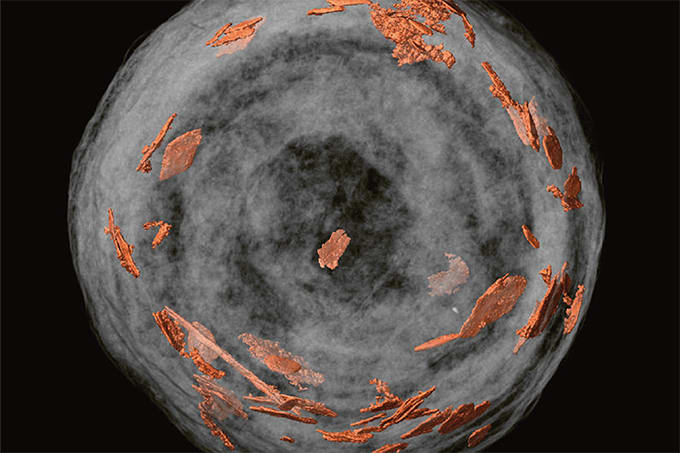
Luis Colón's research focuses on developing advanced silica-based stationary phases for chromatographic applications, particularly in the analysis of persistent environmental contaminants like PFAS. His work emphasizes the importance of sustainability in separation science, highlighting innovative methodologies such as supercritical fluid chromatography.
Background
The development of robust chromatographic materials is crucial for accurate chemical analysis, especially in complex sample mixtures. As environmental contaminants like PFAS pose significant health risks, innovative separation techniques are necessary to enhance detection and analysis. The ongoing evolution of chromatographic technologies is vital for meeting the analytical demands of modern healthcare and environmental monitoring.
Data Highlights
No numerical data or trial data provided in the article.
Key Findings
- Development of polyphenylene-like stationary phases using diazonium chemistry.
- Exploration of azide-organo silica hybrids for enhanced adsorbent anchoring.
- Focus on hydrolytically stable materials for HPLC columns to improve separation at varying pH levels.
- Innovative approaches to separate short-chain PFAS, which are challenging to analyze with traditional methods.
- Advancement of supercritical fluid chromatography (SFC) as a more sustainable alternative to traditional HPLC.
Clinical Implications
The advancements in chromatographic materials can significantly enhance the detection and analysis of environmental contaminants in clinical settings. The emphasis on sustainability in chromatography may lead to reduced solvent waste and improved environmental outcomes, aligning with current healthcare priorities.
Conclusion
Colón's research represents a critical step forward in separation science, addressing both analytical challenges and environmental sustainability. Continued innovation in chromatographic techniques is essential for effective monitoring of health-related contaminants.
Related Resources & Content
- BJS (British Journal of Surgery), 2023 -- Modified Anterior Component Separation Technique: The Carbonell–Bonafé Approach
- Automated Post-Implantation Segmentation of Stereoelectroencephalography (SEEG) Electrodes with Consideration for Bending Effects, 2018
- Investigating the Mesenteric Entry Point as a Vulnerable Area in Gastrointestinal Anastomoses: Insights from an Ex-Vivo Biomechanical Study, 2024
- the analytical scientist, 2026 -- Separation Science in Turbulent Times
- Laboratory Developed Tests | FDA, 2023
- For Clinicians: Frequently Asked Questions about PFAS | PFAS and Your Health | ATSDR, 2025
- Evaluating health impacts of exposure to PFAS mixtures: a systematic review of epidemiological studies using mixture methods, 2023
- Laboratory Developed Tests | FDA
- For Clinicians: Frequently Asked Questions about PFAS | PFAS and Your Health | ATSDR
- Evaluating health impacts of exposure to PFAS mixtures: a systematic review of epidemiological studies using mixture methods - PubMed
This content is an AI-generated, fully rewritten summary based on a published scholarly article. It does not reproduce the original text and is not a substitute for the original publication. Readers are encouraged to consult the source for full context, data, and methodology.
Newsletters
Receive the latest analytical science news, personalities, education, and career development – weekly to your inbox.
About the Author(s)
James Strachan
Over the course of my Biomedical Sciences degree it dawned on me that my goal of becoming a scientist didn’t quite mesh with my lack of affinity for lab work. Thinking on my decision to pursue biology rather than English at age 15 – despite an aptitude for the latter – I realized that science writing was a way to combine what I loved with what I was good at. From there I set out to gather as much freelancing experience as I could, spending 2 years developing scientific content for International Innovation, before completing an MSc in Science Communication. After gaining invaluable experience in supporting the communications efforts of CERN and IN-PART, I joined Texere – where I am focused on producing consistently engaging, cutting-edge and innovative content for our specialist audiences around the world.
Frank van Geel
Frank van Geel is owner of educational website Chromedia and Scientific Director of The Analytical Scientist. He studied analytical chemistry, specialized in mass spectrometry in the Netherlands and did several years of post-doc work in spectroscopy with Jim Winefordner at the University of Florida in the US. Then he became a science teacher and later publisher in chemistry and physics related topics. He developed numerous publications in chemistry and other sciences. He strongly supports the mission: Building online communities is the road to take. We need to strengthen the quality of analytical chemistry and we need to strengthen our community by sharing know-how and by sharing our opinions, visions and our views of the future of analytical science.