The Analytical Scientist
  • Explore

    Explore

    • Latest
    • News & Research
    • Trends & Challenges
    • Keynote Interviews
    • Opinion & Personal Narratives
    • Product Profiles
    • App Notes
    • The Product Book

    Featured Topics

    • Mass Spectrometry
    • Chromatography
    • Spectroscopy

    Issues

    • Latest Issue
    • Archive
  • Topics

    Techniques & Tools

    • Mass Spectrometry
    • Chromatography
    • Spectroscopy
    • Microscopy
    • Sensors
    • Data and AI

    • View All Topics

    Applications & Fields

    • Clinical
    • Environmental
    • Food, Beverage & Agriculture
    • Pharma and Biopharma
    • Omics
    • Forensics
  • People & Profiles

    People & Profiles

    • Power List
    • Voices in the Community
    • Sitting Down With
    • Authors & Contributors
  • Business & Education

    Business & Education

    • Innovation
    • Business & Entrepreneurship
    • Career Pathways
  • Events
    • Live Events
    • Webinars
  • Multimedia
    • Video
    • Content Hubs
Subscribe
Subscribe

False

The Analytical Scientist / Issues / 2026 / October / New Tick-Borne Virus Identified in China
Microscopy Genomics & DNA Analysis

New Tick-Borne Virus Identified in China

Molecular and antibody assays identified ALTNV in patients with fever after tick exposure

10/07/2026 2 min read
  • Full Article
  • Summary
  • Takeaways
  • Listen
  • Report
  • Scorecard
  • Quiz
  • Poll
  • Topic Commentary

Share

Objective:

To identify and characterize a previously unknown tick-borne virus in patients with fever and tick exposure in China.

Approach:
  • Patient testing: Researchers used RNA sequencing to identify the virus in patients suspected of having SFTS who tested negative for Dabie bandavirus (DBV), then screened 3,163 patients with fever and recent tick exposure.
  • Virus characterization: They analyzed the viral genome, cultured virus from patient serum, and used immunofluorescence and electron microscopy to confirm its identity.
  • Tick investigation: Researchers tested 47,428 ticks from 15 provinces and conducted laboratory transmission experiments.
Key Findings:
  • The virus, named Asian longhorned tick nairovirus (ALTNV), was classified as a distinct member of the Orthonairovirus genus.
  • ALTNV RNA or immunoglobulin M antibodies were detected in 10.4% of the 3,163 patients; 15.1% of patients who tested negative for DBV had evidence of ALTNV infection.
  • Among 56 patients infected only with ALTNV, fatigue was reported by 84%, gastrointestinal symptoms by 80%, thrombocytopenia occurred in 38%, and elevated aminotransferase levels in 36%. All recovered without reported lasting complications.
  • Thirty-eight patients had both ALTNV and DBV. Respiratory symptoms and kidney impairment were more frequent than among patients with DBV alone; seven coinfected patients died. The study could not determine whether ALTNV contributed to greater severity.
  • ALTNV RNA was detected in 1.29% of tested ticks, with the highest rate in Haemaphysalis longicornis (1.75%). Laboratory experiments showed this tick could transmit the virus to mice.
Interpretation:

The findings identify ALTNV as another potential cause of fever and thrombocytopenia after tick exposure. Because ALTNV and DBV can occur in the same regions and cause similar findings, the researchers noted that molecular and antibody testing may be needed to distinguish them.

Limitations:
  • The study could not establish whether ALTNV contributed to greater disease severity in coinfected patients.
  • Further assay validation and surveillance are needed to establish diagnostic performance and determine the virus’s geographic distribution.
Sources:
  • The New England Journal of Medicine (as cited in the provided context)

This content is an AI-generated, fully rewritten summary based on a published scholarly article. It does not reproduce the original text and is not a substitute for the original publication. Readers are encouraged to consult the source for full context, data, and methodology.

Newsletters

Receive the latest analytical science news, personalities, education, and career development – weekly to your inbox.

Newsletter Signup Image

False

Advertisement

Recommended

False

Related Content

The Analytical Scientist Innovation Awards 2024: #3
Microscopy
The Analytical Scientist Innovation Awards 2024: #3

December 6, 2024

4 min read

Bruker’s multiphoton microscopy module, OptoVolt, ranks third in our Innovation Awards. Here, Jimmy Fong, product development lead, walks us through the major moments during development.

Let Me See That Brain
Microscopy
Let Me See That Brain

December 9, 2024

1 min read

TRISCO sets a new standard for 3D RNA imaging, delivering high-resolution and uniform images to offer insights into brain function and anatomy

Loading the Molecular Dice
Microscopy
Loading the Molecular Dice

December 12, 2024

2 min read

How a framework for controlling molecular reactions at the atomic scale has potential implications for nanotechnology, pharmaceutical synthesis, and clean energy research
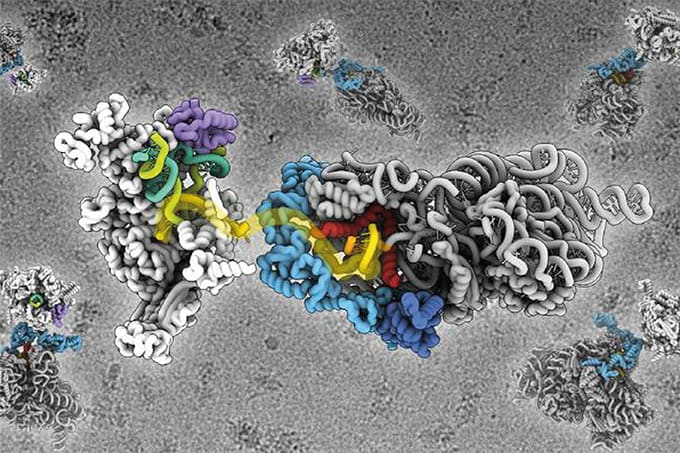
Found in Translation
Microscopy
Found in Translation

December 16, 2024

1 min read

Cryo-EM addresses a key question in gene expression: how ribosomes initiate translation

Affiliations:

Specialties:

Areas of Expertise:

Contributions:

False

The Analytical Scientist
Subscribe

About

  • About Us
  • Work at Conexiant Europe
  • Terms and Conditions
  • Privacy Policy
  • Advertise With Us
  • Contact Us

Copyright © 2026 Texere Publishing Limited (trading as Conexiant), with registered number 08113419 whose registered office is at Booths No. 1, Booths Park, Chelford Road, Knutsford, England, WA16 8GS.