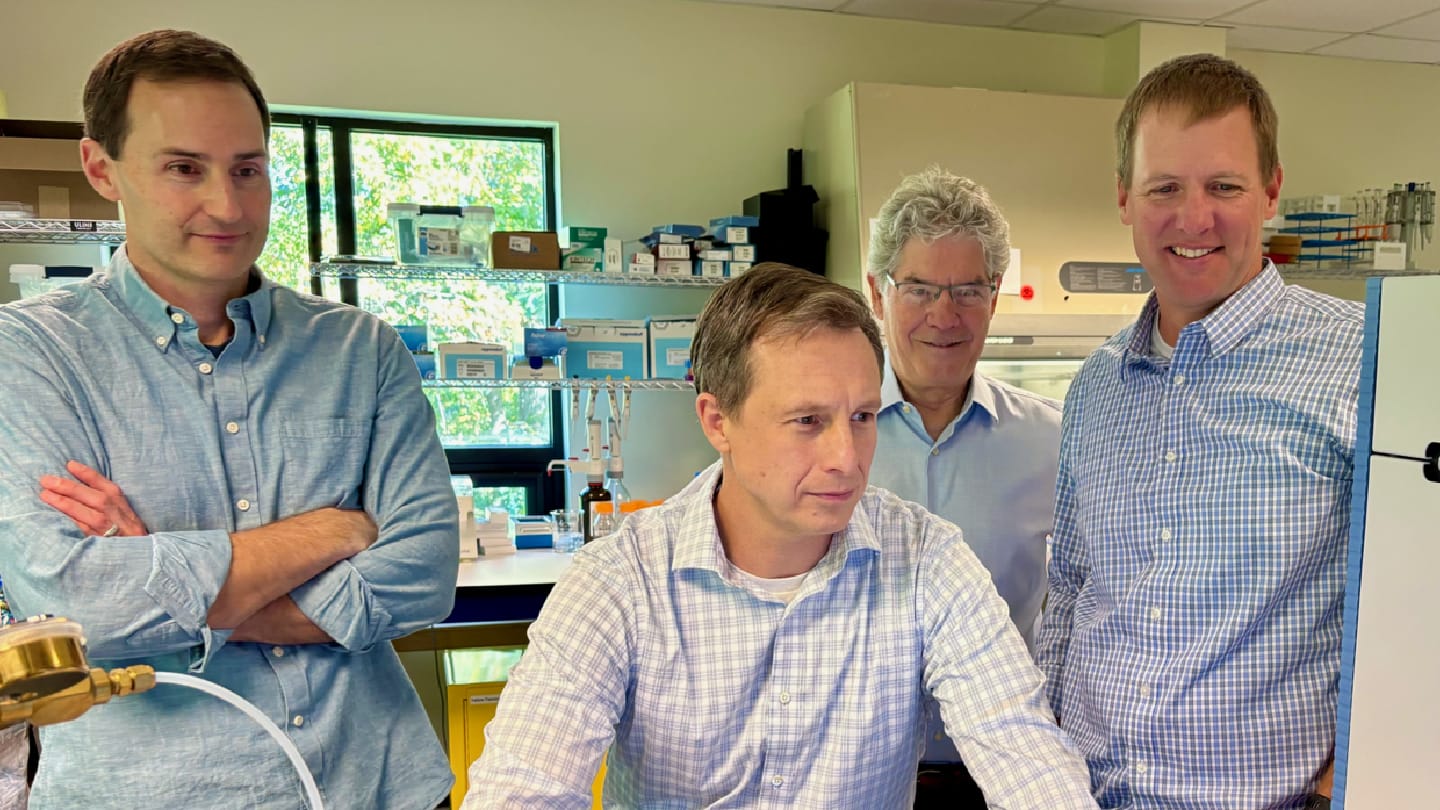
J. Michael Ramsey has spent three decades turning analytical technologies developed in his lab into companies, beginning with microfluidics spinout Caliper Technologies (now part of Revvity) in 1996, 908 Devices (NASDAQ:MASS) in 2012, and Codetta Bio in 2021. Will Thompson, meanwhile, has spent much of his career in metabolomics, first in academia at Duke University and later working to translate analytical methods into tools that non-specialist scientists can use.
Those experiences now come together at Move Analytical. Alongside their co-founders, Ramsey and Thompson are attempting to tackle a problem they have seen from different sides: mass spectrometry has advanced enormously, but metabolomics workflows can still be slow to establish, difficult to reproduce, and heavily dependent on expert knowledge.
Here, Ramsey and Thompson discuss what they have learned from building technologies and companies, why they believe automation should remove tedium rather than expertise, and their ambition to make the capabilities of today’s leading metabolomics labs available to a much wider scientific community.
What prompted you to launch Move Analytical?
Will Thompson: I left Duke School of Medicine with a dream to automate much of the metabolomics work being done. Mike had started 908 Devices, which had a great track record of making very tedious tasks much easier, particularly for field forensics and bioprocessing. From that example, we had the nugget of an idea that we were going to build something automated for metabolomics.
Through the years, it became clear that the best thing for us to do was to form a new company after our time at 908 and the purchase of 908’s life sciences products by Repligen. The motivation is that the community needs ways to democratize metabolomics to a degree where the techniques don't take so long to put in place in laboratories, and where it doesn't take an expert to do every step.
The mass spec vendors and other groups are making amazing hardware that can do amazing things, and the technology has come so far that metabolomics needs to be in the hands of more end users. There's a training and experience gap – we just can't train people fast enough to meet the needs of the biological community.
That's really where the opportunity lies. We use the tagline "make metabolomics easy," but it's deeper than that. It's about taking what the community has gained from 20 years of experts at the forefront of this field, showing the way, and making that accessible to a wider array of users.
J. Michael Ramsey: Along with making metabolomics easier, not only for new metabolomics researchers but also for those who are experienced, we want to make it faster. We want to make it easier and faster to bring into your laboratory if you're new to metabolomics, while also helping experienced researchers achieve results faster. And, of course, less time also means less money and less manpower.
Thompson: I would add that the age of AI has been something of an entrepreneur's dream. We can do a lot of things with a small team that may not have been possible just five years ago.
That's one of the reasons the timing was right to start this as a brand-new, small company. Frankly, we can do it with a small team now when we couldn't have done it with a team this size five years ago. People say timing is everything, and I think that's true in this case. A lot of things have lined up for us.
Where are the biggest sources of friction in metabolomics today?
Ramsey: One of the hurdles to getting into metabolomics is that there are just so many details. At 908, we had a scientific advisory board that was proteomics-based, with several big names in proteomics. Will made a presentation on what he was doing in metabolomics, and afterward, this proteomics panel said, across the board, "Wow, this is important." Even these mass spec experts in proteomics recognized that getting into metabolomics is challenging. I remember that very clearly – it was at ASMS in Houston.
There are so many details, from the instrumentation and LC methods to setting up your mass spectrometer, well plates, and sample processing. We're trying not necessarily to automate those things, but to formulate them – to essentially dictate how they can be done easily and successfully.
Thompson: I see three real areas of friction that we're trying to overcome. The first is getting started in metabolomics. Whether it's a lab that's new to metabolomics or simply a new method, it currently often takes months. The first thing you hear people say is, "Well, the first thing I'm going to do is run my library and build my own in-house library." Then six months go by, and you barely have a method ready to go. We're trying to make it possible to implement a turnkey workflow in half a day.
The second is the daily tedium. Things like system suitability and go/no-go criteria are judgment calls, even for an expert in most labs. Is the method performance optimal? Are my peaks integrated correctly? Do I believe this metabolite ID or not? Those are daily decision points that people are making most of the time.
That creates two problems. First, you've got to have the expert to do it. Second, different experts make different decisions, and that affects reproducibility based on the expert – and maybe how much coffee they had that morning.
The third area is time savings. It goes along with that daily tedium, but most of the time you're going to collect a dataset, the processing occurs, and then the next day or two days later you might realize there's a problem. It's almost a forensic process for looking at data quality.
We're moving that much earlier. Immediately after each file is collected and processed, we surface what we call a quality dashboard that evaluates every run in real time. You get real-time feedback, so if the instrument fails, you could have it stop, send you an email, or take whatever you think is the right action. It's about moving from forensic to actionable.
People talk a lot about data quality, but it's still happening in the context of what you do after the experiment has finished. The mass spec may already have moved on to another study. Then you find out two samples weren't injected, or a couple need to be diluted and rerun. That process needs to happen right away.
Those are the three areas where we're making dedicated efforts and building pillars within the company to address the friction.
How does real-time feedback improve data quality?
Thompson: You want to know if your prep was bad within the first couple of runs. You don't want to run the whole experiment and then find out – which happens!
We have dashboards in the system that surface if your quality control levels – the quantitative levels – are off because of a pipetting error or some other lab error. The goal is to improve quality by automating that process and making the information much more actionable.
That's where we see our users saving a ton of time, but they may not even have thought about it in the same way before. It opens up a new capability for them.
What is your broader ambition for Move Analytical?
Thompson: If you boil it down, we want everyone who wants to do metabolomics to have the capabilities that exist in today's expert laboratories.
A lot of the workflows – we call them software-defined workflows – are built around expert procedures, expert knowledge, and community knowledge. It's not just ours; it's built on community best practices. We want to implement those best practices throughout the field so that it's not just a small network of labs that can accomplish these tasks. The potential impact is too big to have these capabilities siloed within only certain groups. That's one of my goals.
Ramsey: I would say it's about building tools to provide easier, faster, lower-cost access to biological information, focused on metabolomics for now. We've also talked about eventually expanding beyond metabolomics. We think the sorts of tools we're putting together for metabolomics can have an impact on other LC-MS areas.
What roles should automation and standardization play in metabolomics?
Thompson: I think we have to be careful with those words because automation and standardization can be very polarizing. There is no one method that gets everything you would want to measure in a metabolomics experiment.
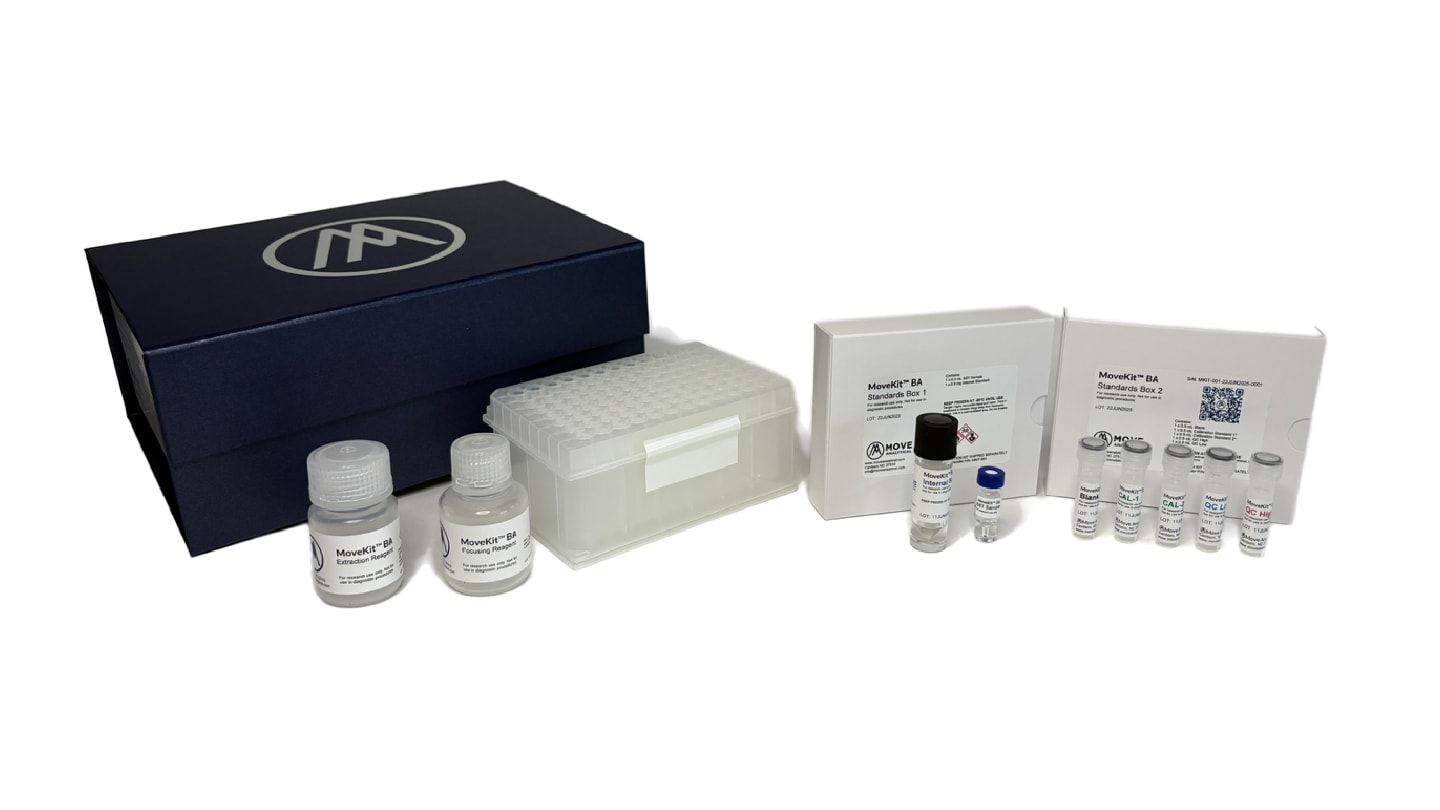
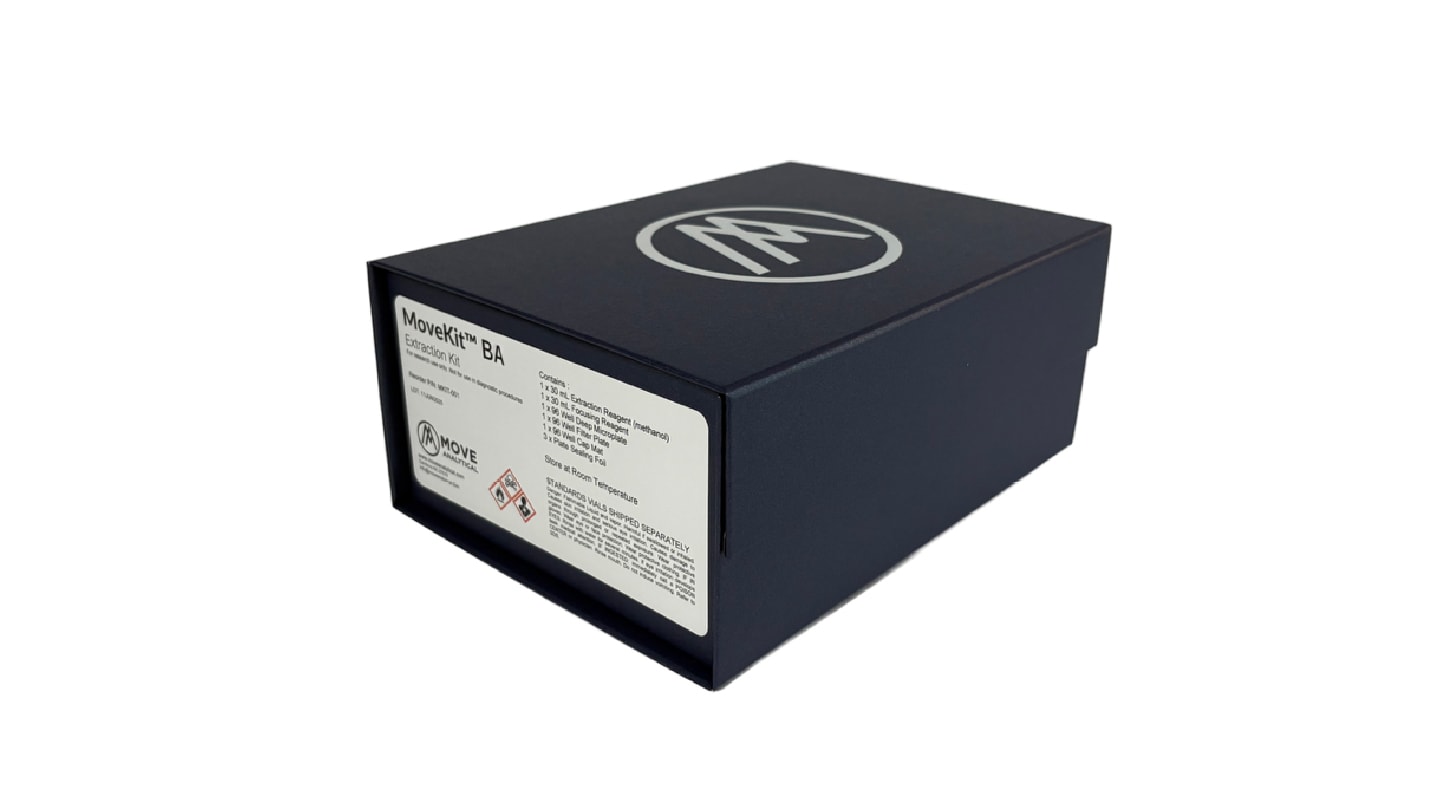
What we think about a lot is putting the tools in place so that workflows can be defined. We have specific kits now for bile acids and polar metabolites, but what we're really building is a "kit builder." That will allow us to harmonize the approach – real-time feedback, data quality control procedures, use of internal standards, and use of reference materials – while understanding that there are lots of great chemists and biologists out there with their own very interesting problems.
The solutions can only be standardized so far, because you can't go to someone with a very specific, interesting biological question and give them a method that doesn't cover what they need to measure. It's a fine line. We're trying to provide workflows that people can use to get started and jump in. But the bigger vision, as Mike said, is building a way for people to take the automation and harmonize the workflows, rather than standardizing the method.
I believe that by harmonizing the workflows, we make them accessible to everyone. But it also makes the analytical chemist's job perhaps even more interesting. If we've freed up a lot of the time they've spent reintegrating peaks or doing something annoying, they're able to use their expertise to do much more interesting things. And the biochemists can do much more interesting things in interrogating the data and learning about new pathways.
That's also how we think about AI. We don't think about AI as replacing people. We think about it as replacing the tedium and using it appropriately. We don't always have AI embedded in our software, but we think about how it can be used with access to our software because there are much more important and challenging problems to be solved.
We need to use it to replace the tedium so that we can use our brains to attack much more interesting, bigger-picture problems.
Ramsey: We're not trying to replace analytical laboratory technicians or researchers. We're trying to increase throughput – more information per unit time, per unit dollar.
What lessons from your previous startups have shaped Move Analytical?
Ramsey: It’s actually been three decades. My first spinout was in 1996 – Caliper Technologies, which later became Caliper Life Sciences, based on microfluidics technology.
That first experience involved a lot of on-the-job training. My first four companies were all VC-funded, and we had to move really fast because there was a lot of competition. Move is different because we’re basically self-funding the company and we believe we have a unique vision on how to assist the analytical chemist in generating quality metabolomics data more efficiently.
As Will mentioned, particularly on the software side, AI provides incredible efficiencies in terms of development. Historically, software has always been the slow part. It has held up almost every product at every company in which I’ve been involved.
The lessons I apply here are about focus – not spreading yourself too thin, focusing on products, and getting them launched. I would also say having teams that are both smart and nice is really important. People need to get along.
We have small numbers here, but you can still have people with hidden agendas, and we don’t have any of those issues. Everybody gets along, everybody can say exactly what they think, and no one gets upset. There’s a high level of transparency and teamwork within Move.
Move Analytical LLC is a little bit of a different animal from my previous companies, but there are experiences that relate – having people who are cooperative and have a strong work ethic.
Thompson: To give credit where credit is due, when [cofounder] Scott Mellors and I first had the idea for this company, we knew we needed two people: someone to lead software development and someone with strategic experience. For the software role, we also wanted someone who had founded a company before. James Campbell is world class. This is his third startup, and it’s been amazing to work with him.
For a strategic partner, we needed Mike, who had already spun-out four companies from his laboratory. We pitched those two guys within a few days of each other. They asked some hard questions, as you would expect from people with previous startup experience, and really made us hone our initial pitch and vision.
Of course, we’ve changed two or three times since then in terms of what we were actually going to do. But it’s been an incredible learning experience for me and Scott. We had an idea I felt very strongly about, but we’ve really been learning from Mike and James about how this whole startup business works.
What advice would you give scientists thinking about starting a company?
Ramsey: You have to think about it really hard about objectives. Most of the people I deal with are in academia, and they talk to me about spinning out companies. The first thing I say is that if you think science is hard, business is another order of magnitude more challenging.
You have to think about what impact your product can have and what the addressable market is. How many people are interested in this? What competition do you have to deal with? How much money do you need? Is this something you can develop with a low-burn-rate company, or do you need to move fast because there’s competition either ahead of you or on your heels?
Does it need to be a venture-funded company? Do you need tens of millions of dollars to get to that first product, or is it something where a few hundred thousand can get you to a product that gives you a decent return?
In academia, I have lots of colleagues who start companies and get excited about producing a piece of letterhead with the company name on it, which is sort of trivial. It deserves a lot of deep thought before you enter into one of these activities.
The other aspect is that, if you’re a scientist and a technical person, you really need a business partner – someone with business acumen. You’ll have trouble getting investors to listen to you if you don’t have that business skill alongside you, particularly if you haven’t done it before.
Finding that business partner can be challenging. You want someone who is experienced with startups and has the same ethical standards and views of life and people that you have.
And then there’s impact. People have to get some return on investment if they’re going to hand dollars over to you for your product.
Thompson: I’ll add an anecdote. I first talked to Mike about leaving Duke in 2014, shortly after the founding of 908. I’d always been impressed and interested, but the timing for me personally wasn’t right.
When I left Duke, I didn’t have my own lab or a way to spin something out independently. My wife says maybe I was bored – maybe it was an early midlife crisis – but really it was to learn how to run a business. I wanted to learn how to take an idea or technology and move it out into the world.
It’s a totally different experience doing something once in a laboratory versus having customers able to run your approach and your technology independently. Doing hard things is easy. Doing hard things easily is very hard.
Seeing what Mike’s team at 908 did with the miniaturized mass spec – taking a mass spec and handing it to a firefighter or a DEA agent with the M908 and MX908 – I was hooked as soon as I saw that technology. It takes vision and a lot of work to take a complex technology like that and make it easy. I was very motivated by Mike, and the team at 908 as an example of how to do that.
Ramsey: For me, starting companies is also about giving back to society. The money people are all about return on investment, and of course that matters to VCs.
For me, society, through federal and state grants, has supported me my entire life, whether I was at Oak Ridge National Laboratory or UNC Chapel Hill. I’ve always had this feeling that I should return something more than just writing papers and publishing them in peer-reviewed journals. I want to deliver technology that has an impact on society.
I think we’ve done that with the previous companies, and I think there’s potentially a big impact here for Move Analytical as well.
What comes next for Move Analytical – and what do you hope it will change?
Ramsey: The product we launched at ASMS this year was focused on bile acids, with targeted species as well as the ability to do untargeted analysis. Using that experience, and the kit-builder concept, the next step is to expand into other areas of metabolomics – lipidomics and other molecule classes.
We want to make entry into metabolomics easy for people. We want to make it fast, low cost, and accurate.
Thompson: It’s no secret that we’re going to be adding more panels and expanding the coverage. We’re also working hard on allowing people to incorporate their own methods into our software workflows.
In terms of what I hope we can change, I’d like us to ride this wave of excitement around metabolomics and become a force multiplier for collaboration between labs.
My hope is that we can ultimately help change how people use metabolomics data and how that information moves between groups. It would be egotistical to think we could drive that change alone, but I hope we can be part of a community moving in that direction.
We want to provide tools that improve the conversation around metabolomics data and move us past arguments over what constitutes good-quality data. Once we know we have good-quality data, we can move on to the more important question: how do we interpret it in the context of why we’re here in the first place – to study the biology and make an impact?
And, more immediately, we need to get beyond the small number of users we have right now. We need to get our tools out there and become a larger contributor to a really exciting metabolomics community.
Newsletters
Receive the latest analytical science news, personalities, education, and career development – weekly to your inbox.