This interview is part of The Analytical Scientist’s feature exploring how analytical technologies are changing the science of sport – from metabolomics, microsampling, and wearables to anti-doping, recovery, muscle growth, and precision medicine.

Liam Heaney’s work sits at an unusual intersection of analytical chemistry, exercise physiology, sport, and health. A Reader in Bioanalytical Chemistry at Loughborough University, Heaney began in sports science before moving into breath analysis, mass spectrometry, and metabolomics – tools he now applies to questions around athlete monitoring, anti-doping, microbial metabolites, and respiratory health.
Here, he discusses what analytical science can already offer sport, where the field still lacks robust biomarkers, and what it will take to turn molecular measurements into practical decisions for athletes and coaches.
How did your path lead you into the unusual intersection of analytical science, sport, and performance research?
I’ve always had a big interest in sport – both from a spectator and participation point of view – so growing up I was good at science and loved sport, and naturally gravitated toward sports science. When I was younger and starting university, all I really had in mind was working with professional football clubs, rugby clubs, or athletes from any discipline, trying to improve performance.
I first did a degree in sport and exercise science, then a master’s in exercise physiology. It was toward the end of the master’s, during the research project, that I realized I really enjoyed the research side of things – perhaps even more than the applied side. I still liked the idea of applied work, but it was a difficult world to break into professionally, so I started looking more seriously at research and PhD opportunities.
Originally I was interested in areas closer to traditional sports science, but then an opportunity came up that, looking back, still seems slightly unusual: I ended up in a chemistry lab. My PhD was still entirely exercise-based and sport-related, but I focused on exhaled volatiles and breath analysis. We looked at swimming, specifically disinfection byproducts that are inhaled, stored, and exhaled after swimming, and explored whether there were links between what people breathed out and their baseline fitness levels.
That pushed me into the mass spectrometry world. The work was in the non-targeted omics space, and from there I moved away from sport temporarily and did a postdoc in clinical analysis. That’s where I got my first real hands-on experience with quantitative LC-MS, which still forms a large part of what we do now.
That postdoc also introduced me to microbiome-related research. Most of the work involved microbial metabolites and how they related to cardiovascular disease outcomes. We focused a lot on TMAO, which was very fashionable at the time because of its links to disease, but the more I read, the more interested I became in the broader metabolism of bacteria – particularly metabolites derived from diet – and the idea that many of these compounds might not always be harmful and could actually be beneficial. That led to a growing interest in things like short-chain fatty acids, which are now a major part of our work.
After that, I returned to Loughborough. I’d done my undergraduate degree, master’s, and PhD there, then moved to Leicester for the postdoc, and eventually came back because I realized that these analytical technologies really needed to be used more in sports research.
How has that shaped the way your lab is set up at Loughborough?
Part of the issue is structural: you usually have a mass spectrometry lab sitting in a chemistry department, while sports science research happens somewhere completely separate – a health sciences or human performance department – so the two worlds don’t naturally interact. What I wanted to do at Loughborough was build that bridge.
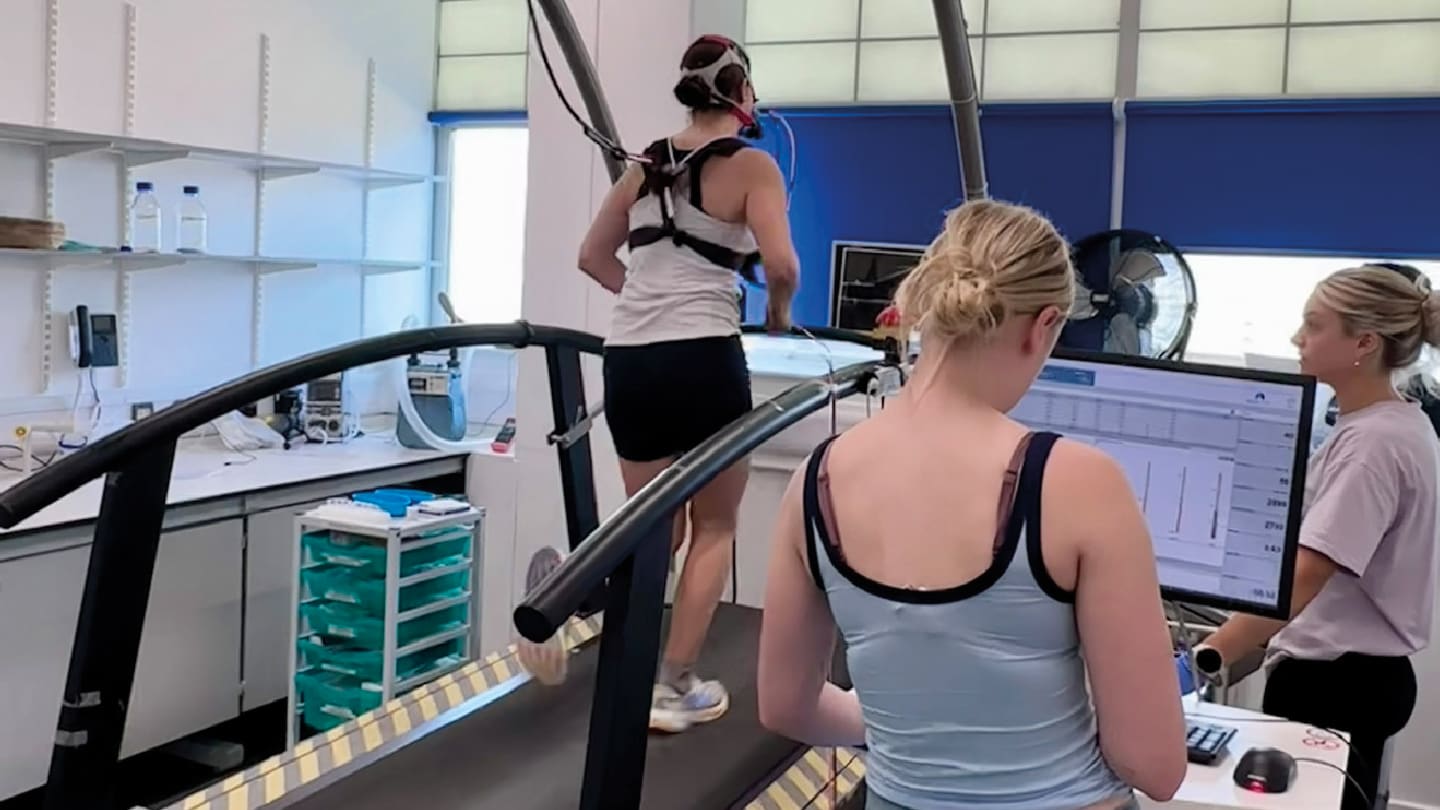
We now have a relatively modest MS lab, but it’s physically embedded within one of the sports research buildings. The room opposite our lab is a fundamental exercise physiology lab with treadmills and gas analysis equipment, so everything is in the same environment. That proximity has made collaboration much easier and encouraged more researchers to use the technology.

Where do you see the biggest opportunities for analytical science to influence sports performance and exercise science?
Mass spectrometry is already well established within sports anti-doping. But we don’t have a similarly mature body of knowledge around using analytical science for things like performance monitoring, injury susceptibility, fatigue monitoring, or understanding training load. There’s a lot of interest in whether we can identify markers that tell us when an athlete is approaching overtraining syndrome, or when changes in physiology might indicate elevated injury risk.
There have certainly been studies in these areas, but many of the molecules that emerge from exercise-based metabolomics studies are heavily influenced by things like nutrition, hydration, or general metabolic changes that naturally occur during exercise. Untangling those effects and determining what actually provides actionable information for athlete monitoring is still a major challenge.
At the moment, I don’t think we yet have those definitive targets or markers that we know are robust enough to work consistently across individuals – or even across different sporting disciplines. Precision medicine approaches sound fantastic in theory, but in elite sport they may simply involve too much complexity and workload to be practical on a routine basis.
If we do eventually identify reliable markers, though, then the next step probably moves beyond our discipline. At that point you hand things over to experts in wearables, biosensors, and other sensing technologies that can translate those discoveries into practical athlete monitoring tools.
Because ultimately, in elite sport, you can’t interfere too much with training schedules. Coaches, nutritionists, and athletes already work within highly structured systems, especially in high-value sports like football. Even something as simple as asking an athlete to spend an extra three minutes doing a test can become problematic. Ideally, you want to gather meaningful information with as little disruption or invasiveness as possible.
So I still think we’re very much at the frontier of this area. We haven’t fully crossed that final threshold yet. More infrastructure, more collaboration, and simply more people working at the intersection of analytical science and sport will help move things forward.
Can you give me an overview of the research your group is doing in this area – particularly the work around the gut microbiome, which perhaps isn’t the first thing people think of in relation to sports performance?
A lot of this goes back to the work I was doing previously at the University of Leicester, where we were studying microbial metabolites and their links to poor outcomes in cardiovascular disease and other health conditions. During that period, I started reading more widely and began noticing recurring links between certain beneficial microbial metabolites and exercise or performance-related outcomes.
The main metabolites we’ve focused on in our lab are short-chain fatty acids. One of the first things we did after I moved back to Loughborough was bring in a student to develop a quantitative GC-MS assay for these compounds. Initially that work was clinically focused, but from there we started asking whether short-chain fatty acids could potentially serve as positive indicators – or even positive drivers – of athletic performance.
One of my PhD students, who has recently completed his studies, focused on supplementation studies. Rather than trying to manipulate the gut microbiome itself to increase production of these metabolites, we wanted to bypass the “middleman” and supplement the compounds directly.
Normally, gut bacteria produce short-chain fatty acids through the fermentation of fibres and other complex carbohydrates that we can’t digest ourselves. Some also come from protein breakdown, but fibre fermentation is the main source. However, even if you increase production in the gut, a lot of those metabolites are used locally within the gut environment and never make it into circulation. So our thinking was: why not supplement them chemically and see what happens?
The first phase of that work looked at the pharmacokinetics – essentially, if we administer these compounds as fatty acid salts, how much actually enters the system, and how dose-dependent are those changes? That work has now been published.
The major study then involved four weeks of supplementation with acetate, butyrate, and propionate – effectively a combination of the three main short-chain fatty acids. We tested participants using a self-paced 5 km treadmill run, where runners controlled the speed themselves but couldn’t see their pace or elapsed time – only the distance completed. Interestingly, trained runners are incredibly good at reproducing their pacing under those conditions.
After the supplementation period and performance testing, we also put participants through a fairly gruelling muscle damage protocol involving 100 drop jumps from a 60 cm platform. The idea there was that while any direct performance improvements from supplementation might be relatively small, there’s substantial evidence suggesting these compounds may have anti-inflammatory or immune-related effects.
Without giving too much away – because we’re still preparing the manuscript – the results weren’t necessarily as dramatic as we initially hoped. But there were definitely some interesting findings that suggest directions worth pursuing further.
Alongside that, we’ve also been looking at short-chain fatty acids outside the sports context. One paper currently we recently published examined whether levels detected in breath correlate with blood concentrations. Interestingly, they don’t seem to match up in the way we expected.
The assumption had been that these compounds could cross fairly easily from blood into breath via the lungs. But what we’re seeing suggests that at least some of the short-chain fatty acids detected in breath may actually be produced locally within the lungs themselves.
That opens up another area we’re becoming increasingly interested in – whether short-chain fatty acids could be used to support respiratory health. That has obvious relevance in sport, especially for athletes who travel frequently, spend time on flights, or undergo heavy training loads, all of which increase susceptibility to respiratory infections and illness.
There’s also interest in sports like swimming, where breathing mechanics are tightly regulated, and in other physically demanding professions such as the military or firefighting. In many ways, those occupations resemble elite sport – just in heavy protective clothing.
So although this whole area is still relatively new for us, we think there’s real translational potential there, both in athletic performance and broader health applications.

Could elite sport become an early testing ground for precision medicine-style approaches?
Definitely – and people are already thinking along those lines. Not necessarily in the full precision medicine sense yet, but there have been studies looking at how things like urinary metabolism change across different phases of a sporting season: pre-season, intense match periods, and later parts of the season, for example. Researchers have then tried to link those metabolic changes to outcomes such as injury risk.
They do see perturbations, but the limitation is that these studies usually aren’t truly personalized. Researchers may have baseline samples, but they don’t have years of longitudinal data that would allow them to build a highly individualized metabolic model for each athlete.
And honestly, just obtaining those samples in the first place is extremely difficult. Getting repeated biological samples from elite athletes over long periods of time is a huge logistical challenge. A lot of this work, particularly in football, ends up being done in younger academy groups – under-19 squads at professional clubs, for example – because there’s slightly more flexibility in scheduling and access.
So while the idea of establishing a “stable proteome” or “stable metabolome” for an individual athlete and then detecting deviations from that baseline makes a lot of sense scientifically, the practical reality is much harder. The time commitment and resources required are enormous.
That’s one of the reasons progress in this area can feel slow. You can perform these experiments with highly trained recreational athletes, but the question is whether those findings truly translate to elite-level performers, whose physiology, training loads, and recovery demands are often very different.
For example, a lot of the work we do at Loughborough is carried out using extremely well-trained student athletes. In nutrition research especially, working directly with elite professionals can be difficult because there’s always concern about anti-doping risks. Even when you discuss testing novel nutritional interventions, athletes and teams still have to trust you completely.
So for practical reasons, you often end up working a couple of levels below the very top tier – with athletes who are still highly trained, but who aren’t subject to constant anti-doping scrutiny.
Longitudinal precision monitoring introduces even more complications. You need consistent access to the same athletes over extended periods, but people transfer clubs, change coaches, travel constantly, or simply can’t provide samples at the required times. Scheduling alone becomes a major challenge.
Then there’s the analytical side: what exactly are you measuring? Are you running a full omics experiment every time? If so, how do you avoid biasing your results toward molecules that are already well characterized and easy to identify?
One thing I always find interesting is that many metabolomics studies repeatedly identify the same compounds. But is that because those compounds are genuinely the most biologically important, or simply because they’re easy to detect? They’re already present in spectral libraries, we’ve seen the standards before, and the software can identify them quickly.
That raises the broader issue of the “dark metabolome” – all the compounds we still don’t really understand or can’t confidently annotate. I think that’s been a long-standing challenge in metabolomics generally. Large library-based platforms are incredibly useful, but inevitably your answers are shaped by what’s already in the library. So there’s always the question: what are we still missing?
And then there’s the challenge of validating completely novel findings. You can have a strong theoretical idea about a molecule or pathway, but we know from experience that many theoretical ideas simply don’t hold up once you test them in real-world athlete populations.
In many ways, the situation mirrors precision medicine itself: scientifically exciting, but incredibly complex. The big difference is funding. Precision medicine attracts huge investment because it’s tied directly to health outcomes, lifespan, and disease. Sport doesn’t receive that same level of support. Governments and major funding bodies generally don’t view athlete monitoring experiments as critical public health priorities, so the resources needed for truly large-scale precision sport studies are rarely available.
Could analytical science also change how anti-doping testing is carried out?
We’re interested in anti-doping, but from a slightly different angle. The major anti-doping laboratories are already extraordinarily good at what they do – the science, the assays, the detection methods are constantly improving. What interests us is whether there’s room to add another layer into that workflow.
We’ve been exploring smaller-footprint instrumentation that could potentially be transported on-site and used for rapid screening. The idea wouldn’t be to replace the main anti-doping labs, but perhaps to screen a much larger number of athletes and identify samples that should then be prioritized for full laboratory testing.
In our lab we’ve been working with Waters and SpectralWorks on proof-of-concept studies using ASAP-MS to see whether we can qualitatively screen samples and generate some form of risk marker. The trade-off, of course, is that smaller, portable systems generally have lower sensitivity and specificity compared with full laboratory instrumentation, so it’s more of a rough-and-ready approach. But it could still become useful as an initial screening layer to determine which samples warrant deeper analysis.
Are there any forms of monitoring or chemical testing that athletes could be using now – even beyond mass spectrometry – or is the field still waiting for better biomarkers?
Honestly, I’m not sure there’s anything truly new that has broken through yet. In elite sport, there’s still a heavy reliance on what you might call traditional chemical testing: lactate levels, breath gases, those sorts of measures.
There does seem to be increasing interest in monitoring things like carbon dioxide levels, but again, these approaches aren’t necessarily game-changing – they’ve been around for a long time. Sometimes it’s more that people shift focus in terms of which established measures they’re most interested in tracking.
If we want to bring newer sensor technologies into sport, we need to know what we’re actually trying to measure – and that’s still the challenge. Sweat is an obvious candidate, and there’s a lot of interest there, but it comes with plenty of complications. Sweat rates vary between people, the composition of sweat varies, and some molecules, like lactate, can be produced locally in the sweat glands, meaning they don’t necessarily reflect what’s happening in the blood.
So there are still difficult questions around what these measurements actually mean. At the moment, the tools that are used most heavily – particularly with elite and Olympic-level athletes – remain things like heart rate recovery, VO₂, VCO₂, and lactate levels.
Even if there were a breakthrough biomarker tomorrow, I think it would still take a long time for athletes, coaches, and support teams to trust it and adopt it. The methods currently in use have been around for decades, and that history gives them a level of credibility that any new technology would have to earn.
Given the scale of money in elite sport, are you surprised that more of it doesn’t flow into analytical or sports science research?
Surprisingly, there’s very little research funding coming directly from the areas of sport that have the most money – the clubs, leagues, and organizations themselves.
At Loughborough we’ve had people, including friends of mine, who’ve done PhDs linked to organizations like the UK Sports Institute and through those partnerships you sometimes get access to athletes and samples such as blood or urine. But even then, a lot of the work tends to focus more on physical measurements: things like running economy, biomechanics, or movement trajectories, because those tests can be integrated relatively easily into normal training schedules.
You can bring an athlete in, put them on a treadmill instead of a track session one day, and gather the data without too much disruption. Biological sampling and analytical testing are often much more difficult to implement routinely.
In reality, a lot of the funding that does exist in sports research comes from nutrition and supplement companies wanting evidence that their products improve performance or recovery. They want independent research demonstrating efficacy.
Of course, that creates an inherent bias toward the product being tested, because ultimately the company is funding the work. When we do that kind of research, we usually try to negotiate projects that also add something broader and scientifically valuable to the field, rather than simply running straightforward product testing studies.
For example, one of my colleagues, Steve Bailey, works a lot on mitochondrial respiration. If a supplement claims to influence mitochondrial function, we might build a study around that physiology rather than simply asking whether performance improved. That gives you something scientifically richer than just a commercial validation exercise.
When I was a PhD student, there definitely seemed to be more opportunities for funding linked to sporting institutes and Olympic programs, where some of that investment filtered down into universities. But it feels much tighter now.
And ultimately, sports science simply isn’t viewed as a major government funding priority in the same way as health research. That’s understandable. At Loughborough, we’ve generally had more success securing funding around physical activity and behavioral health because those areas connect directly to public health outcomes – encouraging sedentary populations to become more active, for example.
Looking ahead, where do you see the biggest opportunities for breakthroughs in analytical science and sport over the next five to ten years?
I think the area we’re working in still has a lot of potential. If you look at the influence of the bacteria that live with us – especially in the gut – there are many dietary factors being linked to positive outcomes. We’re interested in short-chain fatty acids, but there’s also a lot of work around polyphenol breakdown products.
People are studying things like curcumin, New Zealand blackcurrant, tart cherry, and other polyphenol metabolites. There’s also been major interest in urolithin A over the past few years, which is produced from ellagic acid – found at high levels in pomegranate. Again, that sits within the polyphenol space.
So from a nutritional supplement perspective, and in terms of what these compounds might offer athletes, I think there’s still real potential for breakthroughs. Whether that comes from one compound, one pathway, or a combination of many factors remains to be seen, but it’s an area I think we’ll hear a lot more about.
If there is going to be a major breakthrough connecting analytical science directly with performance sport, though, I think it could be around training-load monitoring. If we could provide an analytical service that helps athletes and coaches understand whether someone is pushing too hard – or whether they have capacity to push harder – that would be hugely valuable.
In theory, it could help keep athletes in the ideal training zone across the year: reducing load when injury or strain risk is rising, but increasing it when the body can tolerate more. I don’t know whether that breakthrough will come soon, but for me, that would be one of the most exciting ways analytical science could contribute to performance sport.
Newsletters
Receive the latest analytical science news, personalities, education, and career development – weekly to your inbox.