There is growing awareness – among both specialists and the public – of the risks posed by per- and polyfluoroalkyl substances (PFAS or PFASs). These “forever chemicals” persist in the environment, bioaccumulate up the food chain, and are found in everything from medical devices, to food packaging, to rainwater. At the same time, toxicology data continues to build a clearer picture of their potential health impacts.
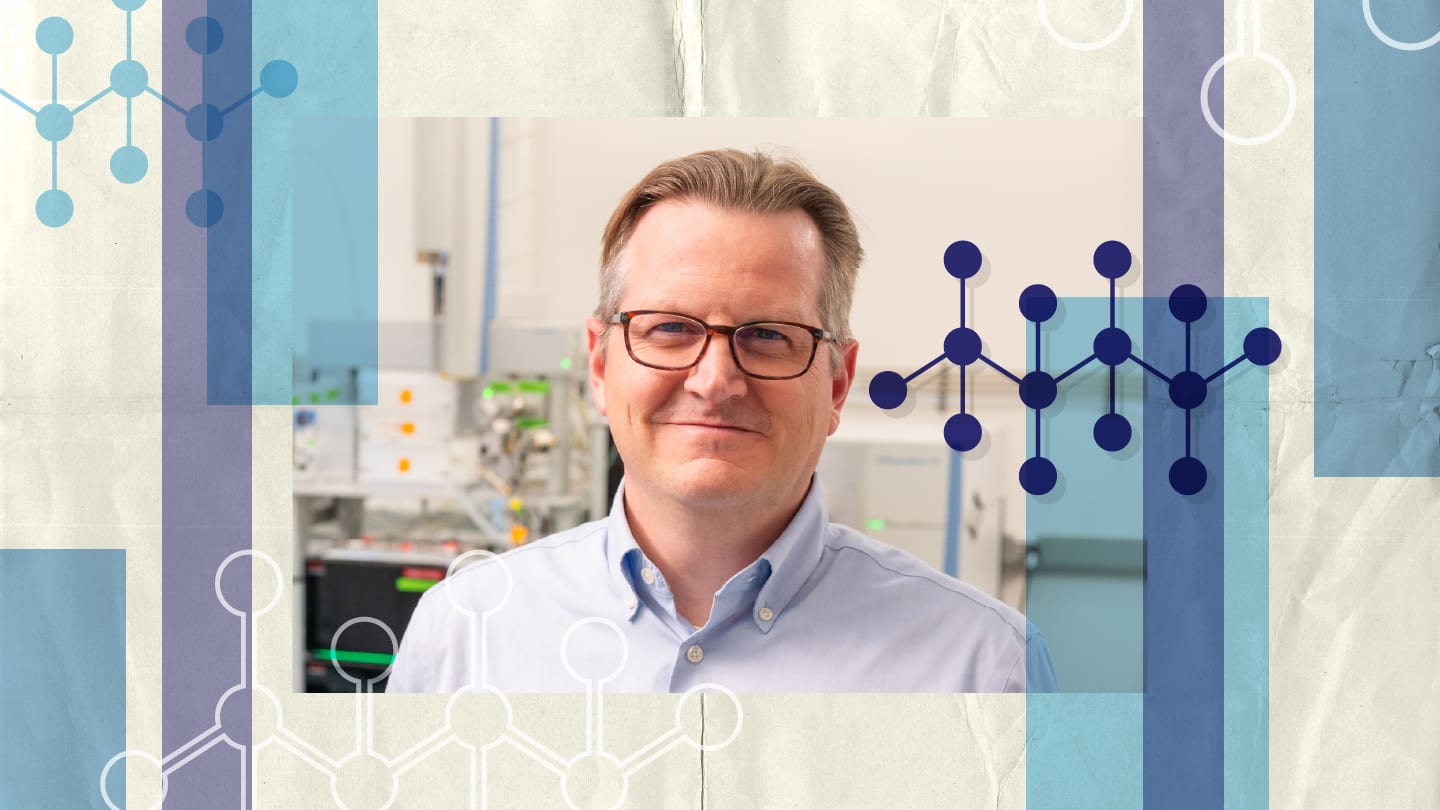
Chris Higgins, environmental chemist at the Colorado School of Mines, USA, remembers exactly where he was when he first heard about PFAS. “I was standing in my kitchen in a rental just outside of Boston – back in 2001,” he says. Higgins was about to drive across the country to start a Masters with Dick Luthy (who, sadly, recently passed away) at Stanford, but his one-year Dean’s fellowship wasn’t tied to a specific project. “I called up Dick and asked him if there are any topics I should be thinking about.” Luthy replied: “I’ve heard about these things called fluorochemicals. I think they might be big – you should look into them.”
The suggestion stuck. As it happens, Craig Criddle had moved from Michigan State to Stanford a year or two earlier, and he had co-authored a fairly seminal review around 1997 called Fluorochemicals in the Biosphere. “That paper really kicked off the idea that people should start looking at these chemicals,” says Higgins. It was Criddle who suggested that Luthy, as someone familiar with PCBs and DDT, ought to be looking at fluorinated compounds. “Everyone else in Dick’s group was working on PCBs, but I came in and he basically said, ‘I don’t know anything about them, so let’s figure out what we can learn together,’” he says.
The Luthy lab was one of the first environmental engineering labs in the US to receive funding for an LC-MS instrument. “At that time, LC-MS systems were rare in environmental engineering labs,” says Higgins. His first paper, co-authored with Jennifer Field, looked at PFAS in sediments and sludge. After that, Higgins shifted more into studying PFAS fate – how they interact with soils and sediments – as well as their bioaccumulation. “Over the past 20–25 years, my career has largely followed those same threads: analytical methods, fate and transport (how the chemicals move through the environment), and some work on human exposure and bioaccumulation,” he says. “The only major area I wasn’t involved in at the beginning but have moved into more recently is treatment – the ‘how do we fix this?’ side of the problem.”
This question – against a backdrop of regulatory uncertainty, heightened consumer awareness, and mounting litigation – is what we will tackle as part of a special series of articles: PFAS: New Frontiers, Emerging Solutions. In this interview, Higgins reflects on how far we’ve come – and explores what analytical scientists must do next to meet the PFAS challenge.
How has our understanding of PFAS evolved since you first began studying them?
When we first started, I don’t think we fully appreciated the sheer diversity of the products, or the range of PFASs that were out there. For example, in the early days, we didn’t pay much attention to what I’d now call the TFA subgroup – essentially, compounds that have trifluoromethyl groups and thus have the potential to transform into TFA. There are a lot of them. Trifluoromethyl groups are quite common in pesticides, pharmaceuticals, and so on. We were aware of them – I remember seeing references to things like trifluralin – but it felt like a separate topic.
And to some extent, I still think of it that way. When we talk about PFASs today, there’s this category of long-chain PFASs – which is what most people think of when they hear the term – and they tend to be the most problematic. They’ve been added to the Stockholm Convention, and their bioaccumulation and toxicity are much better established.
Then there are the short-chain compounds – some of which are still in use – and the ultra-short ones, which would include TFA. From my perspective, each of these categories comes with very different issues and concerns. As much as we’d like to group all PFASs together, the reality is that when you start dealing with TFA and TFA precursors, the complexity ramps up so quickly that it almost requires an entirely separate conversation. It’s a very different challenge compared to the substances that originally drove interest in the field – things like PFOS and PFOA.
How have analytical methods for detecting and quantifying PFAS evolved since your early work?
LC-MS has become a lot more common. When I was learning, everyone used to say, “You should learn GC-MS first – and then you can move on to LC-MS,” because GC-MS was considered the foundational technique. I think that’s completely flipped now. These days, most people doing environmental mass spectrometry start with LC-MS. Honestly, it’s a bit easier – you can take a water sample, put it directly on the instrument, and start seeing results.
I remember when high-resolution systems started to be discussed as potentially useful in environmental work. High-res instruments had been around for a while, but their application in this field was just beginning. I got my first high-res system around 2015 or 2016 – about ten years ago now – and today almost everything we do uses high resolution.
We still have a triple quadrupole system in the lab, but high-res instruments have really proven their value for environmental work. And for PFASs in particular, they’ve been transformative – the sensitivity now is so high that we can measure incredibly low concentrations in environmental samples. Triple quads are still extremely sensitive, but many high-res systems are as well.
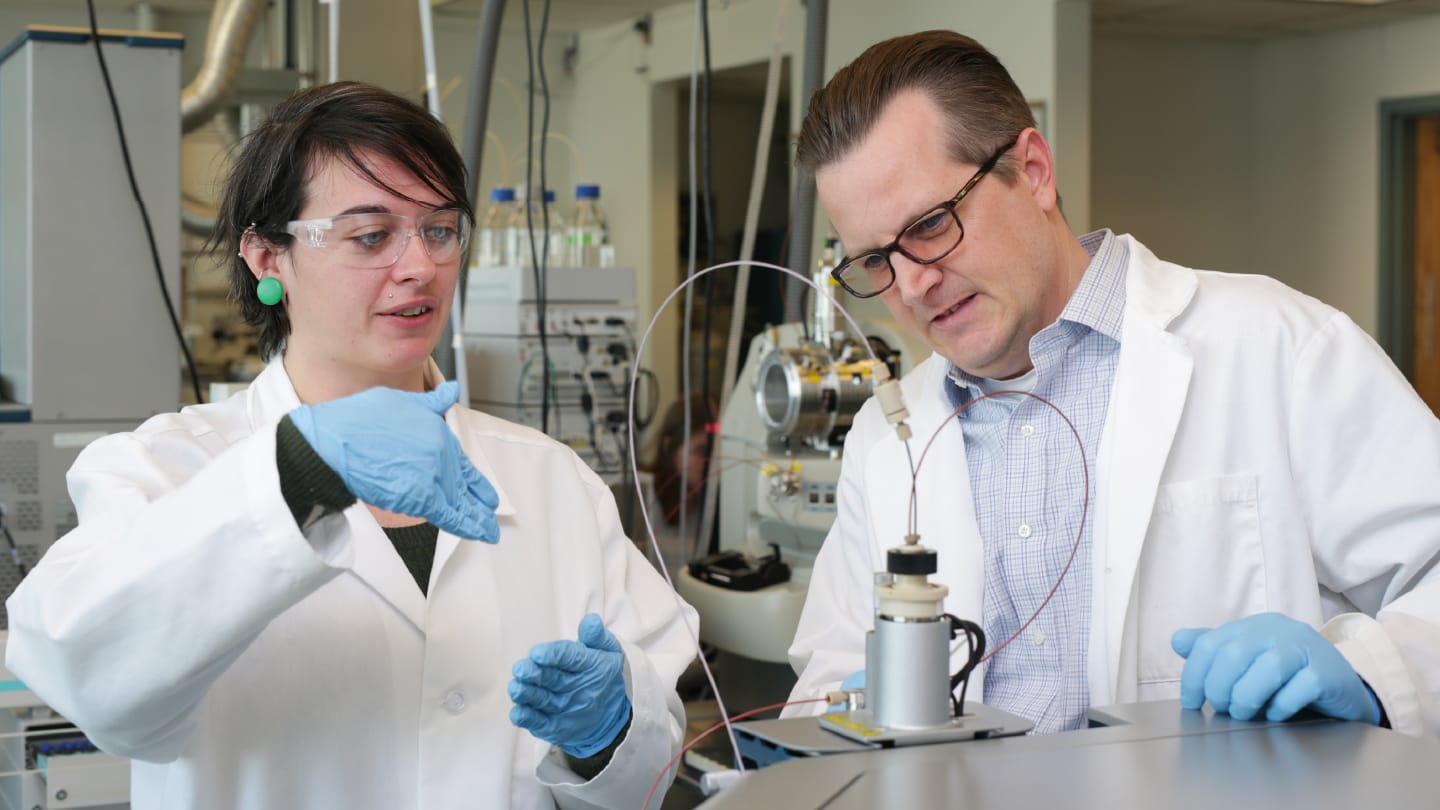
I would never have imagined having four LC-MS systems in my lab when I first started. But honestly, at this point, we probably need more!
What are the biggest analytical challenges we still face when it comes to detecting and understanding PFAS?
Some of the most interesting – and honestly sometimes frustrating – challenges come from the fact that we’re probably still not looking at all the right compounds.
There was a period a few years ago when people would almost compete over who had the longest target analyte list. But I’m not sure how helpful that was. Especially in targeted work, where you can’t just “look for everything” the way you can with high-resolution instruments.
There’s still a bit of that list-focused mentality, partly because of all the standardized method lists – EPA Method 533, 537, 1633, and on the gas phase side, the OTM 45, 50, and 55 methods. Those methods aren’t bad, but they’re not necessarily the be-all-and-end-all that some people treat them as. I think there are probably important groups of compounds missing from those lists – especially depending on the type of site or sample you’re dealing with.
So, targeted lists are expanding, but there’s probably a point of diminishing returns. We might not detect many additional compounds except at very low levels, so we should focus on prioritizing the compounds that really matter – the ones that we should be measuring. The size of the list doesn’t matter if it doesn’t contain the right compounds. And given how many PFASs exist, the incredibly low levels we can detect, and the fact that there’s probably not a square meter of the planet without a PFAS molecule on it…
I think we’re moving more toward routine monitoring. That will drive things like remediation goals and regulatory decisions. But for that to be practical, we need more automation. Right now, something like solid-phase extraction is really helpful – but also extremely time-consuming. Jennifer Field really pushed me to try direct-injection analysis wherever possible because it minimizes sample prep and speeds things up. She does it slightly differently from how we do it, but the principle is the same: you can process far more samples much more quickly. And as we shift further into large-scale monitoring scenarios, I think that kind of approach is going to be incredibly valuable.
How would you characterize the current landscape of PFAS remediation?
If we accept what toxicologists tell us about appropriate regulatory levels, then I do think we generally have the tools needed to provide people with clean water. There’s particular concern around some of the regulatory levels being discussed in Europe, especially regarding TFA, simply because it’s so prevalent. But with that issue aside, I do think we have the core technologies we need. The main challenge is making them cost-effective. But if we’re talking about remediation more broadly – restoring the environment to its original state, not just making water safe to drink – that’s where the bigger challenges lie.
We have to think about where people’s exposure actually comes from. Robin Vestergren from the Swedish Chemicals Agency did a study a few years ago that involved what I’d call exposure reconstruction – and my group has been some of that too for impacted communities too. What he showed, and what we’ve also seen, is that when drinking water is contaminated, yes, that’s a major exposure route – but beyond drinking water, the biggest route is food.
It’s things like fish, eggs, and other animal products, at least for the long-chain PFASs. So if the goal is to reduce human exposure, it’s not enough just to clean up water; we also have to be thinking about food. If you’re a food company with any animal-derived ingredients in your products, it’s probably wise to start looking into PFASs – both what might be present in the food itself, and what might come from the processing equipment or packaging. Developing faster, easier, more reliable ways to analyze food for a broader suite of PFASs – beyond just PFOS and PFOA – is something we absolutely need to do.
Site remediation is another issue. The US Department of Defense (DoD) has a large number of impacted sites with contaminated groundwater and soil due to their use of aqueous film forming foam (AFFF), and they’re trying to clean those up, for example. There are some really exciting advancements happening in that space. But it’s important to remember that the DoD wasn’t the only user of AFFF.
The big question for remediation is scalability. And this is where analytical chemistry really comes in: we need to be sure we’re not turning one problem into another. For example, there was a moratorium here in the US on the disposal of DoD PFAS-impacted materials in hazardous waste incinerators, as there were reports of elevated levels of some fluorochemicals around those incinerators. That raised questions: were they fully destroying the PFASs, or only partially combusting them?
While there are some non-thermal PFAS destruction technologies, most of the promising ones rely on applying large amounts of energy and/or heat. That means they can generate volatile products – and we need to be sure we’re not simply creating a new set of airborne contaminants in the process. If the PFASs aren’t completely broken down, they may exit into the air and become a new source of exposure – and they could have a completely different toxicological profile from the original compounds.
We call those products of incomplete destruction, or PIDs. There’s been a lot of analytical work to determine how best to detect them: do we use EPA methods that capture emissions on a sorbent or in a SUMMA canister, followed by direct analysis? Or do we try real-time measurements – things like FTIR or chemical ionization mass spectrometry (CIMS)? These are the kinds of analytical tools that need more attention.
For more traditional contract lab work, the path is clearer: we’ll be monitoring water, soil, fish, blood, and probably food for years to come – that’s becoming routine. What’s less clear is how best to analyze destruction processes – whether at hazardous waste incinerators or municipal ones, which are also fed consumer products containing PFASs (like old furniture with stain-resistant coatings that ends up in landfills). Are we getting emissions from those? Are we fully destroying the PFASs?
I’m just starting to get involved in this work myself, but it’s become clear that any remediation project involving destruction technologies really needs to consider potential air emissions.
For students entering the field today, where do you see the biggest opportunities to contribute meaningfully to PFAS research and solutions?
In terms of skills or approaches, the first thing I’d say is: learn mass spectrometry, as it’s going to be with us for a long time. There will certainly be non-mass spec tools emerging, but there’s a reason mass spec has become the gold standard – it works incredibly well for identifying a wide variety of these compounds, and we understand it deeply. As much as I’d love to see sensor-based approaches, I don’t think we’ll get there in the near future – at least not broadly. Maybe for very specific PFASs, but not for the full diversity of compounds. Mass spec gives you that breadth.
We haven’t talked much about total organic fluorine or related bulk measures. Personally, I’m not a huge fan – they can be useful in certain applications, especially as screening tools, but they don’t give you the specific information you need. If you start seeing high levels of organic fluorine everywhere, it becomes less informative. You need to know what’s there, not just that something is there.
Also, don’t be afraid to go out into the real world. If you want to do environmental work, go collect real samples. Embrace the complexity of the real world. Measuring a clean soil that you’ve spiked in the lab, or a clean fish liver sample you’ve dosed, is not the same as going out and collecting real environmental samples and bringing them back to the lab. People sometimes get nervous about that because it can be messy and difficult – but for a lot of my students and postdocs, that real-world work has been the most eye-opening.
The way I see it, the real world will tell us what the actual problems are – but only if we go out and look. That’s been my guiding principle for all the environmental analytical work we do: let the environment itself guide the science.
Why is it so important for analytical chemists to engage with engineers, toxicologists, and other fields when working on PFAS?
If you want to have an impact, you’ve got to collaborate with people in other disciplines.
What we measure in water is directly relevant to what toxicologists need to know – because that’s the water people drink, or the water fish live in before we eat them. You can’t separate those pieces.
In the remediation space, too, there have been plenty of – I wouldn’t call them false starts, but let’s say premature excitement. People get excited about a result where they think they’ve treated or destroyed a compound only to later find out that the analysis wasn’t exactly wrong, but the chemicals didn’t behave in their system the way they expected. Maybe the compounds were sticking to something unexpectedly, or volatilizing in a way they assumed they wouldn’t – some of them can be volatile under certain conditions.
It’s only when analytical chemists interface with engineers or toxicologists that you can confirm whether those results are real or just experimental artifacts. That’s why I’d say to analytical chemists: don’t be afraid to engage with other fields.
Recognize that what happens in a simple test tube – partitioning to the glass walls, loss to the vial headspace – involves the same physical-chemical processes that control behavior in real-world remediation systems or toxicology experiments. If you understand those processes as an analytical chemist, you can help engineers and toxicologists do better, more accurate work.
As we continue to detect PFAS in more places and at ever lower levels, how should analytical scientists think about the connection between measurement, harm, and public communication?
PFASs are a hugely diverse class of compounds with a wide range of toxicities. The longer-chain compounds are clearly more bioaccumulative, and we have fairly good toxicological data for some of them – but not all. When we find man-made chemicals in people’s blood – chemicals they never chose to put there – it naturally raises concern. Even if toxicity isn’t fully established, evidence of exposure matters, and people deserve to be informed. Today, we can easily detect PFASs in water, blood, and food, but that doesn’t necessarily mean those sources are unsafe – it just means we need to understand our exposure.
As analytical chemists, we can measure almost anything, almost anywhere. There’s value in that, but we also have to be careful about how we communicate what those numbers mean. We have to collaborate with risk assessors and toxicologists to ensure that a measurement doesn’t automatically translate into alarm.
Just because it’s there doesn’t necessarily mean it’s bad – and we need to be very careful and deliberate about how we convey that message.
The Story Continues
Chapter Two: PFAS Enters its Big Data Era – with Jennifer Field
Chapter Three: The Biology of Forever – with Carrie McDonough
Chapter Four: Confronting the Messy Reality of PFAS Regulation – with David Megson
Chapter Five: Portable Sensors: The Next Generation of PFAS Detection – Silvana Andreescu
Newsletters
Receive the latest analytical science news, personalities, education, and career development – weekly to your inbox.