Clinical Report: Out of the Basement and Into the Light
Overview
This report discusses the critical role of analytical science in ensuring the accuracy and reliability of scientific measurements, emphasizing its importance in various fields including healthcare, particularly in diagnostics and treatment monitoring.
Background
Analytical science is fundamental to the integrity of scientific research and public health, impacting areas such as toxicology, environmental science, and clinical chemistry. Despite its significance, the field often lacks recognition and funding compared to more 'fundamental' sciences, leading to suboptimal research outcomes. This report underscores the necessity of valuing analytical rigor and expertise to enhance the quality of scientific outcomes.
Data Highlights
No numerical data or trial data available in the source material.
Key Findings
['Analytical science is crucial for ensuring the quality of measurements that underpin scientific research and public health.', 'There is a perception that analytical chemistry is merely a service, which undermines its value and importance.', 'Investment in core facilities and trained specialists is essential for the advancement of analytical science.', 'Success in analytical science requires recognition of the expertise involved in experimental design and data interpretation.', 'Policymakers and regulatory bodies play a key role in supporting the visibility and funding of analytical science.']Clinical Implications
Healthcare professionals should recognize the pivotal role of analytical science in ensuring accurate diagnostics and treatment outcomes. Increased collaboration with analytical chemists can enhance the reliability of laboratory results and improve patient care through better data interpretation and experimental design.
Conclusion
Enhancing the visibility and respect for analytical science is vital for its growth and for the broader scientific community. A concerted effort is needed to advocate for its recognition as a cornerstone of quality science, including increased funding and support for core facilities.
Related Resources & Content
- UKAS, Embracing change - the transition to ISO 15189:2022, 2023 -- Transition Update
- Nature Medicine, SPIRIT 2025 statement: updated guideline for protocols of randomized trials, 2023 -- Updated Guidelines
- Ophthalmology Management, Thirty Years Together in a Career Defined by Change, 2026 -- Financial Factor
- The ASCO Post, An Honored Poet Explores a Lust for Life on the Boundaries of Near Death, 2020 -- Poetry and Medicine
- Optometric Management, BUSINESS: Optical, 2020 -- Optical Management
- The ASCO Post — A Ruby Anniversary
- Embracing change - the transition to ISO 15189:2022
- SPIRIT 2025 statement: updated guideline for protocols of randomized trials | Nature Medicine
- Integrated peripheral blood multi-omics profiling identifies immune signatures predictive of neoadjuvant PD-1 blockade efficacy in head and neck squamous cell carcinoma | Journal of Translational Medicine | Full Text
This content is an AI-generated, fully rewritten summary based on a published scholarly article. It does not reproduce the original text and is not a substitute for the original publication. Readers are encouraged to consult the source for full context, data, and methodology.
Newsletters
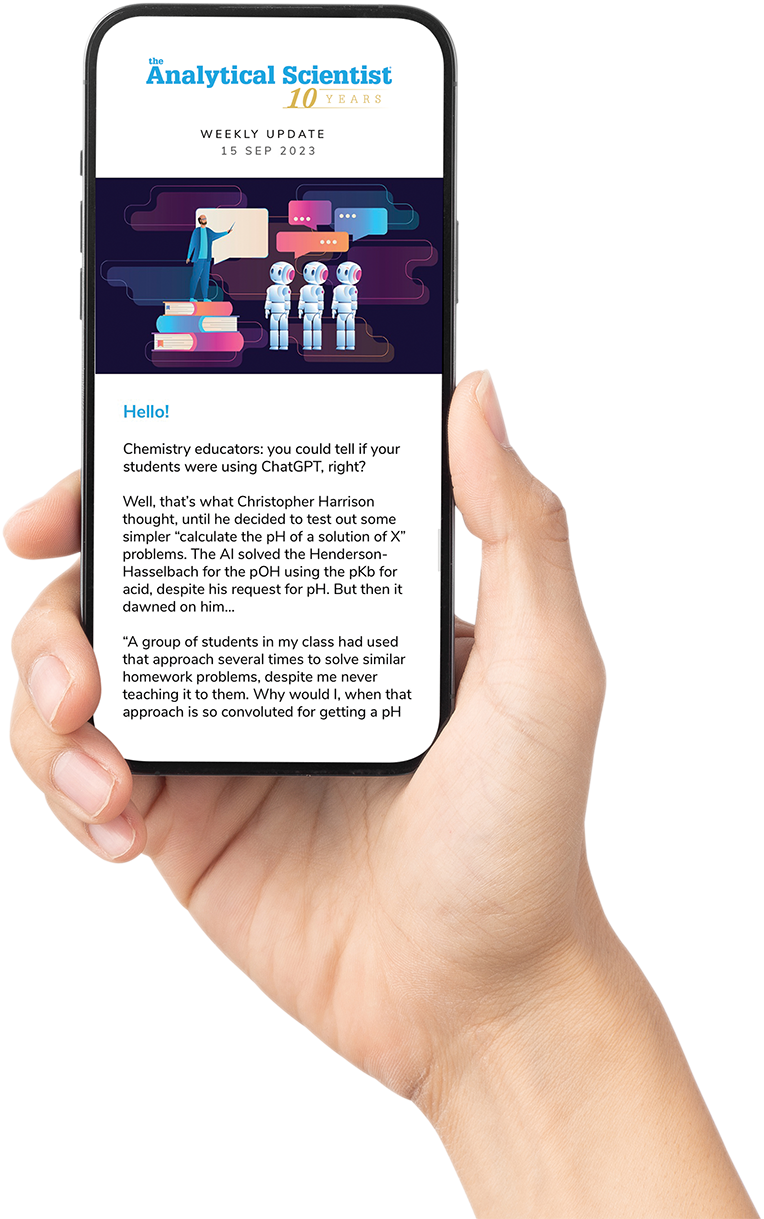
Receive the latest analytical science news, personalities, education, and career development – weekly to your inbox.
About the Author(s)
James Strachan
Over the course of my Biomedical Sciences degree it dawned on me that my goal of becoming a scientist didn’t quite mesh with my lack of affinity for lab work. Thinking on my decision to pursue biology rather than English at age 15 – despite an aptitude for the latter – I realized that science writing was a way to combine what I loved with what I was good at. From there I set out to gather as much freelancing experience as I could, spending 2 years developing scientific content for International Innovation, before completing an MSc in Science Communication. After gaining invaluable experience in supporting the communications efforts of CERN and IN-PART, I joined Texere – where I am focused on producing consistently engaging, cutting-edge and innovative content for our specialist audiences around the world.


