The Analytical Scientist
  • Explore

    Explore

    • Latest
    • News & Research
    • Trends & Challenges
    • Keynote Interviews
    • Opinion & Personal Narratives
    • Product Profiles
    • App Notes
    • The Product Book

    Featured Topics

    • Mass Spectrometry
    • Chromatography
    • Spectroscopy

    Issues

    • Latest Issue
    • Archive
  • Topics

    Techniques & Tools

    • Mass Spectrometry
    • Chromatography
    • Spectroscopy
    • Microscopy
    • Sensors
    • Data and AI

    • View All Topics

    Applications & Fields

    • Clinical
    • Environmental
    • Food, Beverage & Agriculture
    • Pharma and Biopharma
    • Omics
    • Forensics
  • People & Profiles

    People & Profiles

    • Power List
    • Voices in the Community
    • Sitting Down With
    • Authors & Contributors
  • Business & Education

    Business & Education

    • Innovation
    • Business & Entrepreneurship
    • Career Pathways
  • Events
    • Live Events
    • Webinars
  • Multimedia
    • Video
    • Content Hubs
Subscribe
Subscribe

False

The Analytical Scientist / Issues / 2015 / Nov / Landmark Literature: 2015 (part1)
Chromatography Gas Chromatography Chromatography Liquid Chromatography

Landmark Literature: 2015 (part1)

We ask an impossible question as 2015 comes to a close: which piece of literature stood out from the crowd and showed the greatest potential for pushing the field of analytical science forward?

By Davy Guillarme, Hans-Gerd Janssen 11/16/2015 1 min read
  • Full Article
  • Summary
  • Takeaways
  • Poll

Share

5 Key Takeaways
  • 1

    Interest in supercritical fluid chromatography (SFC) has increased due to new generation systems that enhance sensitivity and robustness.

  • 2

    Ultra-high performance SFC (UHPSFC) systems show improved reliability and performance, although extra-column band broadening remains a concern.

  • 3

    The study by De Pauw et al. quantified contributions to extra-column band broadening, emphasizing the importance of UV cell volume.

  • 4

    Minimizing tubing ID in SFC did not significantly improve plate count, contrasting with traditional liquid chromatography practices.

  • 5

    Future UHPSFC systems should optimize compatibility with narrow bore columns and develop UV cells with less than 1 µL volume.

This content is an AI-generated, fully rewritten summary based on a published scholarly article. It does not reproduce the original text and is not a substitute for the original publication. Readers are encouraged to consult the source for full context, data, and methodology.

Newsletters

Receive the latest analytical science news, personalities, education, and career development – weekly to your inbox.
Newsletter Signup Image

About the Author(s)

Davy Guillarme

Davy Guillarme is Senior Lecturer in the School of Pharmaceutical Sciences, University of Geneva/University of Lausanne, Geneva, Switzerland.

More Articles by Davy Guillarme

Hans-Gerd Janssen

Hans-Gerd Janssen is Science Leader of Analytical Chemistry at Unilever Research Vlaardingen, and Professor of Biomacromolecular Separations at the van’t Hoff Institute for Molecular Sciences at the University of Amsterdam, the Netherlands.

More Articles by Hans-Gerd Janssen

False

Advertisement

Recommended

False

Related Content

Spit It Out
Chromatography
Spit It Out

December 4, 2024

1 min read

Saliva-based PA-MS test detects paracetamol overdose in just 10 minutes

The Analytical Scientist Innovation Awards 2024
Chromatography
The Analytical Scientist Innovation Awards 2024

December 11, 2024

10 min read

Meet the products – and the experts – defining analytical innovation in 2024
How Dinosaurs Ate Their Way to Dominance
Chromatography
How Dinosaurs Ate Their Way to Dominance

December 10, 2024

2 min read

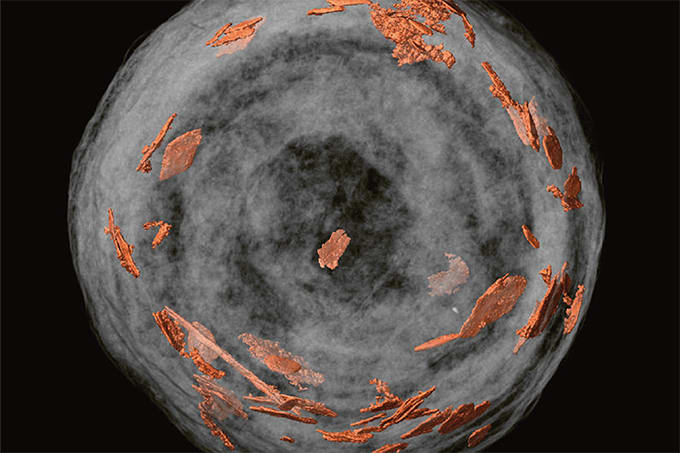
Analyses of fossilized feces, intestinal contents, and vomit reveal how dinosaurs adapted to climate shifts

Charting the Contaminant Iceberg: Part One
Chromatography
Charting the Contaminant Iceberg: Part One

December 17, 2024

5 min read

Torsten C. Schmidt casts his eye on the contaminants of concern for the future and considers how much of the full picture current technology allows us to see – in the first of our two-part interview

Affiliations:

Specialties:

Areas of Expertise:

Contributions:

False

The Analytical Scientist
Subscribe

About

  • About Us
  • Work at Conexiant Europe
  • Terms and Conditions
  • Privacy Policy
  • Advertise With Us
  • Contact Us

Copyright © 2026 Texere Publishing Limited (trading as Conexiant), with registered number 08113419 whose registered office is at Booths No. 1, Booths Park, Chelford Road, Knutsford, England, WA16 8GS.