Precision medicine is often discussed in terms of increasingly sophisticated technologies – from multi-omics and spatial biology to AI-enabled analysis. But even the most advanced platform is only as reliable as the sample and supporting infrastructure behind it.
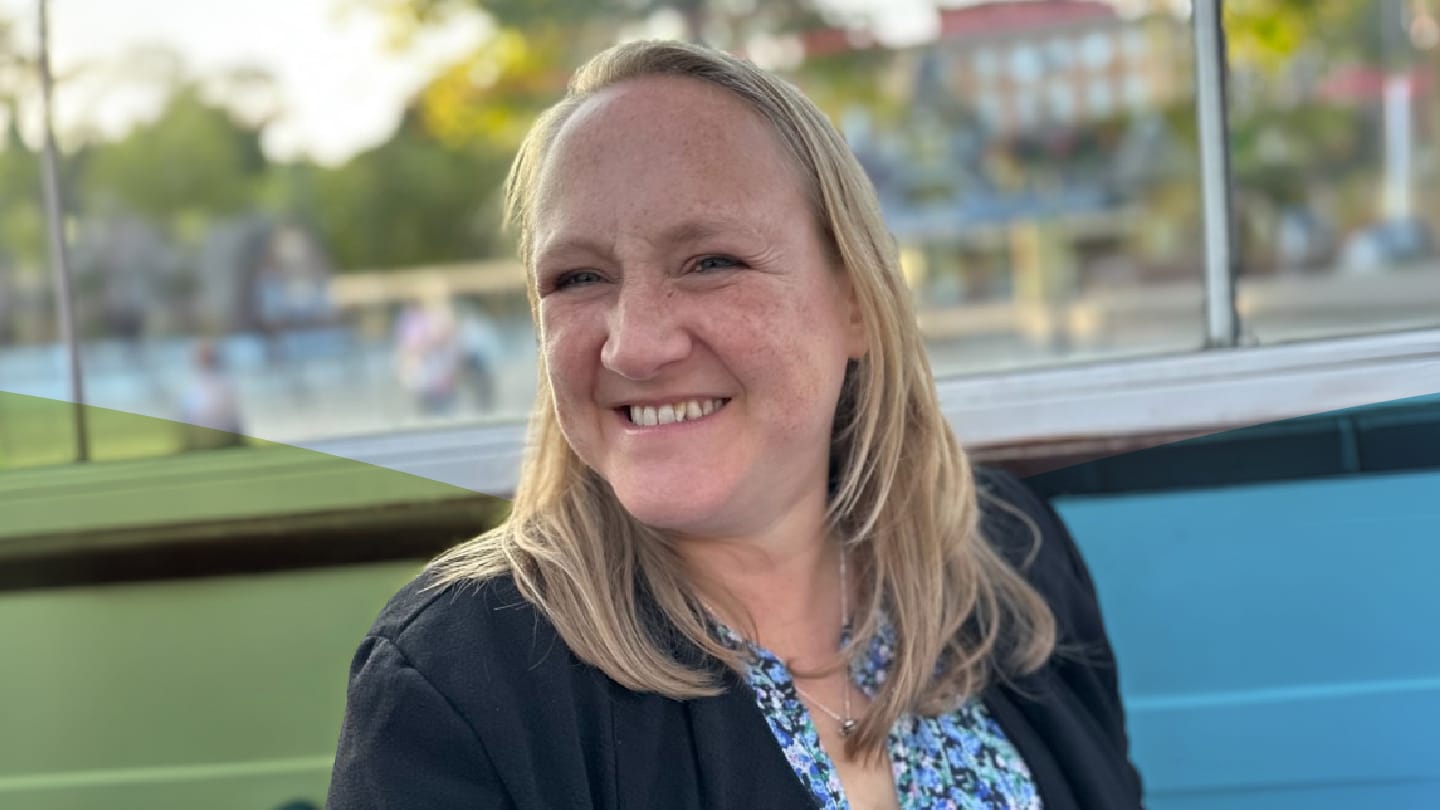
Sonia Houghton is the founder and Director of Sonia Houghton Consulting, where she advises life sciences organizations on commercial strategy, operational delivery, and regulatory compliance across biobanking, sample management, and translational research. Drawing on more than 15 years of experience in drug discovery, biorepositories, and scientific leadership – including serving as Global Cell Bank Lead at AstraZeneca – she explains what it takes to build a robust patient-to-decision pathway and move analytical discoveries into clinical practice.
What have we learned from genomics about what it takes to move an analytical technology from discovery research into precision medicine?
One of the biggest lessons we've learned from genomics is that precision medicine is about far more than analytical capability. Generating high-quality data is only one part of the challenge. To translate discovery into improved patient care, every step of the pathway has to work.
For me, analytical science-enabled precision medicine means ensuring that the biological sample, the analytical method and the resulting data are all robust enough to support meaningful decisions. The excitement is often around the technology, but the weakest links are frequently much earlier in the process.
Precision medicine doesn't start at the sequencer or microscope. It starts with the patient, the consent, the sample, and whether the entire patient-to-decision pathway is realistic, reproducible and designed to succeed.
Even within specialist clinical environments, collecting and preserving samples consistently can be challenging. Small variations in collection, stabilisation, transport or storage can affect sample integrity before the analytical platform ever sees the material.
As healthcare moves towards decentralised models and at-home blood collection solutions, these challenges become even greater. While these approaches improve accessibility, they also introduce variability. If samples are collected incorrectly, are of insufficient quality or fail during transport, the consequences extend beyond poor data – they impact costs, patient confidence and long-term engagement with research.
This is why robustness isn't just about the analytical assay. It's about designing an end-to-end patient-to-decision pathway that clinicians, researchers and patients can all deliver consistently. That includes consent management, logistics, governance, metadata, chain of custody and maintaining sample integrity throughout the journey.
The newer analytical technologies – spatial biology, proteomics, metabolomics and multi-omics – are providing extraordinary biological insight, but they also increase complexity. Richer datasets demand even greater confidence that the underlying samples are representative, well characterised and consistently handled.
We also need to ensure precision medicine is genuinely representative. If the populations used to develop diagnostics and biomarkers do not reflect the diversity of the patients who will ultimately benefit from them, we risk creating tools that perform less effectively across different communities. That is both a scientific and an ethical challenge. The same applies to children and other vulnerable groups, where unmet clinical need is often greatest but research can be more complex.
Ultimately, the next step for precision medicine is not simply generating more data, but generating better, more reproducible and more representative data through workflows that are robust, scalable and centred on the patient. Scientific discovery changes what's possible. Operational excellence determines what ultimately reaches patients.
How are newer omics, spatial, biomarker, and sample-analysis technologies building on – or challenging – the genomics model of precision medicine?
We've long recognised that diseases are complex biological systems, and systems biology has always been the ambition. What's exciting is that advances in omics, spatial biology and increasingly powerful analytical technologies, combined with AI, are finally allowing us to interrogate that complexity in ways that simply weren't possible before.
Rather than replacing genomics, I see these technologies as building upon its foundations. They allow us to move beyond understanding what may be happening biologically to gaining greater insight into where, when and why disease processes occur, creating opportunities for more precise diagnosis and treatment.
However, these advances also place even greater emphasis on the quality of the underlying samples and data. As analytical capability increases, so does our reliance on robust sample collection, preservation, metadata, governance and the integrity of the entire patient-to-decision pathway. AI and sophisticated analytical platforms cannot compensate for poor sample quality or inconsistent workflows.
For me, the opportunity is enormous – but only if we apply the same level of scientific rigour to the operational pathway as we do to the analytical science itself.
What does “analytical science-enabled precision medicine” mean in your area of work?
For me, analytical science-enabled precision medicine means building an end-to-end system that reliably connects the patient to the analytical result.
That starts with ensuring patients can access the right sample collection pathway, whether through local hub-and-spoke networks, specialist centres or increasingly decentralised approaches. Samples must then be collected, preserved and transported within the timeframes required to maintain their integrity, while keeping the patient journey as simple, accessible and positive as possible.
Once the analysis has been completed, the work doesn't stop. Where samples are retained, they must be managed within robust regulatory and governance frameworks, supported by appropriate consent management, traceability and quality systems. In the UK, that includes compliance with the Human Tissue Act where applicable, but the underlying principle is universal: patients, researchers and clinicians need confidence that every sample is managed ethically, securely and transparently throughout its lifecycle.
Ultimately, analytical science only enables precision medicine if every stage of the patient-to-decision pathway is robust. The most sophisticated analytical platform cannot recover information that has already been lost through poor sample collection, transport, storage or governance.
For me, precision medicine isn't simply about generating better analytical data – it's about building trusted systems that allow every patient to benefit from better decisions.
Where are advanced analytical approaches having the greatest impact today?
My expertise lies in translating analytical science into practical implementation, rather than the analytical technologies themselves.
What I would say is that we're seeing meaningful advances across every stage of the pathway. Researchers and clinicians are increasingly able to use powerful analytical platforms to better understand disease, identify biomarkers, stratify patients and guide treatment decisions. That's incredibly exciting.
Perhaps another way of looking at the question is to ask where investment is being directed. Funding often reflects where the greatest opportunities and unmet needs are perceived to be, whether that's multi-omics, spatial biology, AI-enabled analysis or translational diagnostics.
From my own perspective, the greatest impact will come when these scientific advances are matched by equally robust sample collection, logistics, governance and patient-centred workflows. That's what allows discoveries to move beyond the laboratory and into routine clinical practice.
What makes a biomarker, omics signature, or sample-derived measurement robust enough to move beyond discovery and into translational or clinical use?
For me, moving from discovery to clinical use is about much more than demonstrating an interesting biological signal. A biomarker has to be robust enough to support reliable, repeatable clinical decision-making.
That starts with biological relevance, but it also requires analytical robustness. The assay needs to deliver repeatable and reproducible results, often across different laboratories, operators and analytical platforms. Clinical laboratories don't all use identical equipment or manufacturers, so methods need to demonstrate consistent performance within defined analytical specifications.
The biomarker must also withstand the realities of healthcare. Sample collection, transport, storage and processing all need to preserve its integrity, and the workflow has to be practical within routine clinical services. A test that only works under tightly controlled research conditions is unlikely to achieve widespread clinical adoption.
Importantly, the result also needs to be clinically actionable. The measurement should provide information that supports diagnosis, prognosis, patient stratification or treatment decisions, recognising that the ultimate clinical diagnosis remains the responsibility of the treating clinician.
Finally, successful implementation depends on scalability and affordability. Even the most scientifically impressive biomarker will struggle to deliver population-level benefit if it cannot be implemented consistently, efficiently and cost-effectively within real healthcare systems.
Ultimately, robustness isn't a single characteristic – it's the combination of biological relevance, analytical performance, sample integrity, clinical utility and practical implementation that allows a biomarker to move successfully from discovery into routine patient care.
How should the field balance deep molecular profiling with the need for approaches that are scalable, reproducible, and practical?
Deep molecular profiling is incredibly valuable in discovery because it allows us to understand disease biology in much greater detail and identify new hypotheses, biomarkers and patient subgroups.
However, not every discovery workflow can or should become a routine clinical workflow. The field needs to use deep profiling to discover and understand complexity, then translate that insight into approaches that are robust, reproducible, scalable and affordable enough to be used in real-world healthcare settings.
For me, the balance is about being clear on the purpose of the work. If the aim is discovery, depth and complexity may be appropriate. If the aim is clinical implementation, the priority has to shift towards standardization, turnaround time, sample integrity, cost, patient experience and whether the result can support a meaningful decision.
Ultimately, precision medicine will only succeed if we can convert complex biological insight into practical workflows that healthcare systems can actually deliver.
What are the biggest gaps between what current analytical workflows can generate and what clinicians, translational researchers, or drug developers can use?
One of the biggest gaps is between what is technically possible and what is practical to implement routinely.
Analytical technologies are becoming increasingly powerful, generating vast amounts of data and providing remarkable insights into disease biology. However, clinicians, translational researchers and drug developers need solutions that are reliable, reproducible, affordable and easy to integrate into existing workflows.
That means not only robust assays, but also equipment with an appropriate footprint, manageable infrastructure requirements, trained personnel, standardised operating procedures and turnaround times that support clinical decision-making. The future lies in translating complex analytical science into validated, "plug-and-play" solutions that can be deployed consistently beyond specialist research centres.
It's also important that we don't develop technologies that are only accessible to the wealthiest healthcare systems. If precision medicine is to fulfil its promise globally, solutions need to be designed with affordability, resilience and accessibility in mind, enabling implementation in resource-limited settings as well as major academic centres.
Ultimately, innovation shouldn't be judged solely by the sophistication of the technology, but by whether it can be adopted at scale and improve patient outcomes. The most successful analytical platforms will be those that combine scientific excellence with simplicity, robustness and accessibility.
What needs to happen next for omics, spatial biology, biomarker discovery, and sample-to-data workflows to deliver more consistently on the promise of precision medicine?
The field needs to focus not only on generating more complex data, but on making the whole pathway more reliable, reproducible and usable.
That means strengthening the foundations: better sample collection, preservation, logistics, metadata capture, consent management, traceability, governance and quality systems. Without that, even the most advanced omics or spatial biology platform will struggle to generate data that can be trusted and translated.
We also need greater standardisation and validation, so that results can be compared across studies, laboratories, platforms and patient populations. This is particularly important if biomarkers or omics signatures are going to move beyond discovery and support real clinical or translational decisions.
Finally, we need to design with implementation in mind from the start. Workflows must be scalable, affordable, accessible and realistic for the healthcare systems and patients they are intended to serve. Precision medicine will deliver more consistently when scientific innovation is matched by operational rigour, patient-centred design and practical routes to adoption.
Ultimately, precision medicine will fulfil its promise when we place equal value on scientific innovation, operational excellence and the patient experience. Success depends on strengthening every step of the patient-to-decision pathway.
Sonia Houghton chaired the session “From Patient Samples to Precision Medicine: Building the Infrastructure for Translational Research” at the SLAS Europe 2026 Conference and Exhibition. The session explored the infrastructure underpinning translational research, from patient cohort sampling and biospecimen acquisition to automated storage and advanced diagnostic technologies.
Newsletters
Receive the latest analytical science news, personalities, education, and career development – weekly to your inbox.