Biopharmaceutical manufacturing is defined by two non-negotiable requirements: rapid product commercialization and strict GMP. The use of traditional off-line QC inherently introduces significant process risk, primarily due to the time delays that force error detection to be reactive rather than preventative.
Raman spectroscopy can help resolve this manufacturing dilemma. As a non-contact, water-tolerant analytical technology, Raman provides the continuous, molecular-level data necessary to transition from a retrospective, paper-intensive QA/QC workflow to a real-time, predictive control strategy, thereby significantly enhancing product safety and manufacturing efficiency.
Overcoming QC delays
The primary limitation in current biomanufacturing practices is the inherent time lag of traditional QC. The standard workflow involves manual sampling from the bioreactor or production line, rushing the sample to an off-line laboratory for specialized analysis, typically using techniques like high-performance liquid chromatography (HPLC), and then waiting hours or days for results concerning protein folding, stability, or cell culture metabolite concentrations. This cycle is fundamentally reactive. For instance, if a critical nutrient concentration suddenly drops in a 10,000-liter bioreactor, the data confirming the failure may arrive long after the batch quality has already been compromised. This analytical delay poses a critical threat, frequently resulting in a catastrophic batch failure that costs millions of dollars and severely jeopardizes the entire development timeline.
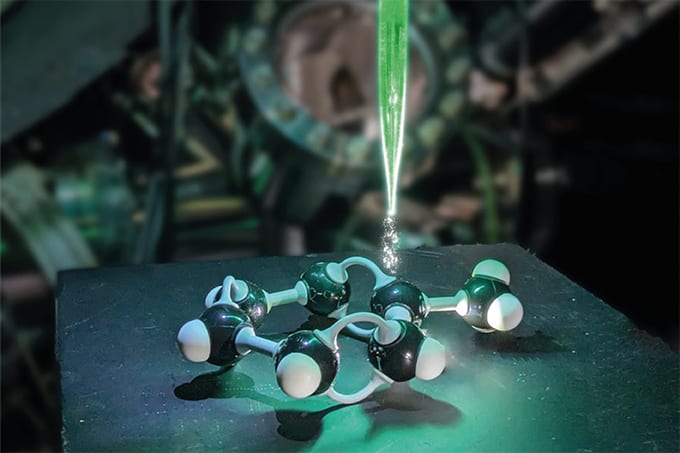
Raman spectroscopy operates as an advanced, non-contact molecular scanner, engineered to provide instantaneous analysis and can be crucial for manufacturers looking to implement PAT. The power of Raman spectroscopy is rooted in its compatibility with aqueous biological systems and its inherent elegance. When a focused laser beam is directed at a sample – often through a glass bioreactor wall or via an in-line probe – most of the light scatters without energy loss. However, a tiny, characteristic fraction of photons undergoes a specific Raman shift, which is directly proportional to the vibrational modes of the chemical bonds within the molecules. This specific energy shift creates a unique molecular fingerprint for every component in the solution, whether it is the API, excipients, buffers, or critical metabolites such as glucose and lactate. Crucially for biopharma, water is a very weak Raman scatterer, generating minimal background "noise" in the resulting spectrum. This specific analytical advantage allows the system to provide a clean, clear snapshot of the critical, low-concentration therapeutic molecules without the dominant interference of the solvent.
Real-world results
Raman spectroscopy can be used in several biopharma applications, including enhancing protein stability and offering formulation assurance. Protein drugs are inherently delicate and prone to aggregation, where misfolded proteins clump together, reducing potency and potentially triggering dangerous immune responses. Traditional stability assessments require lengthy, multi-month studies. The Raman solution accelerates this process through rapid structural diagnostics. For example, a biopharma team observed premature aggregation in a new monoclonal antibody candidate. Instead of waiting weeks for off-line chromatography results, they used Raman to focus on the spectral signature of the protein's disulfide bonds. This rapid analysis pinpointed a specific structural weakness that was being stressed at standard refrigeration temperatures. This molecular insight allowed the team to immediately adjust storage conditions, resulting in an estimated 50% extension of the drug’s projected shelf life and a documented 20% reduction in formulation failures within the early development pipeline, achieving a definitive answer in days, not months.
Raman can also be used for proactive bioreactor process control. Optimal cell culture health is paramount for maximizing drug yield and maintaining consistency, but traditional monitoring relies on delayed, periodic sampling. The Raman solution achieves continuous metabolic steering. Specialized Raman probes installed directly into the bioreactor vessel enable continuous, in-situ monitoring. Utilizing sophisticated chemometric models, the system simultaneously tracks key cell culture attributes every few minutes, including critical nutrients (such as glucose and glutamine), toxic byproducts (like lactate and ammonia), and the drug product's quality attributes. This real-time visibility allows the Raman-linked system to automatically adjust feed rates when a nutrient concentration dips below the optimal threshold. This proactive control led one CMO to report a 25% increase in average drug product yield and a dramatic improvement in batch consistency, successfully moving their process from reactive intervention to true predictive steering.
Advancements beyond the horizon
The future of Raman spectroscopy in biopharma involves integration with advanced data technologies for even greater sensitivity and predictive control. For the detection of trace contaminants, a variant, Surface-Enhanced Raman Spectroscopy (SERS), is emerging. SERS leverages gold or silver nanoparticles to dramatically amplify the Raman signal. This extreme sensitivity allows analysts to measure contaminants at the parts-per-billion level, reducing analysis time from four hours with traditional methods to less than 10 minutes per batch release. Furthermore, the high-density data generated by continuous Raman monitoring is an ideal input for AI and deep learning systems. AI excels at identifying subtle spectral patterns and correlations that are undetectable by human analysis or basic models. This convergence is propelling the industry toward truly predictive quality management. Ultimately, this real-time Raman data could be paired with Digital Twins to allow teams to simulate and optimize complex production parameters without ever risking a high-value commercial batch.
Raman spectroscopy has evolved past its designation as an emerging technology to become an indispensable tool for the biopharma sector. By providing real-time, molecular-level insight directly within the manufacturing environment, it serves as the key mechanism for building more efficient, robust, and reliable processes, ensuring that life-saving therapies reach patients faster and with greater assurance of quality.
Newsletters
Receive the latest analytical science news, personalities, education, and career development – weekly to your inbox.