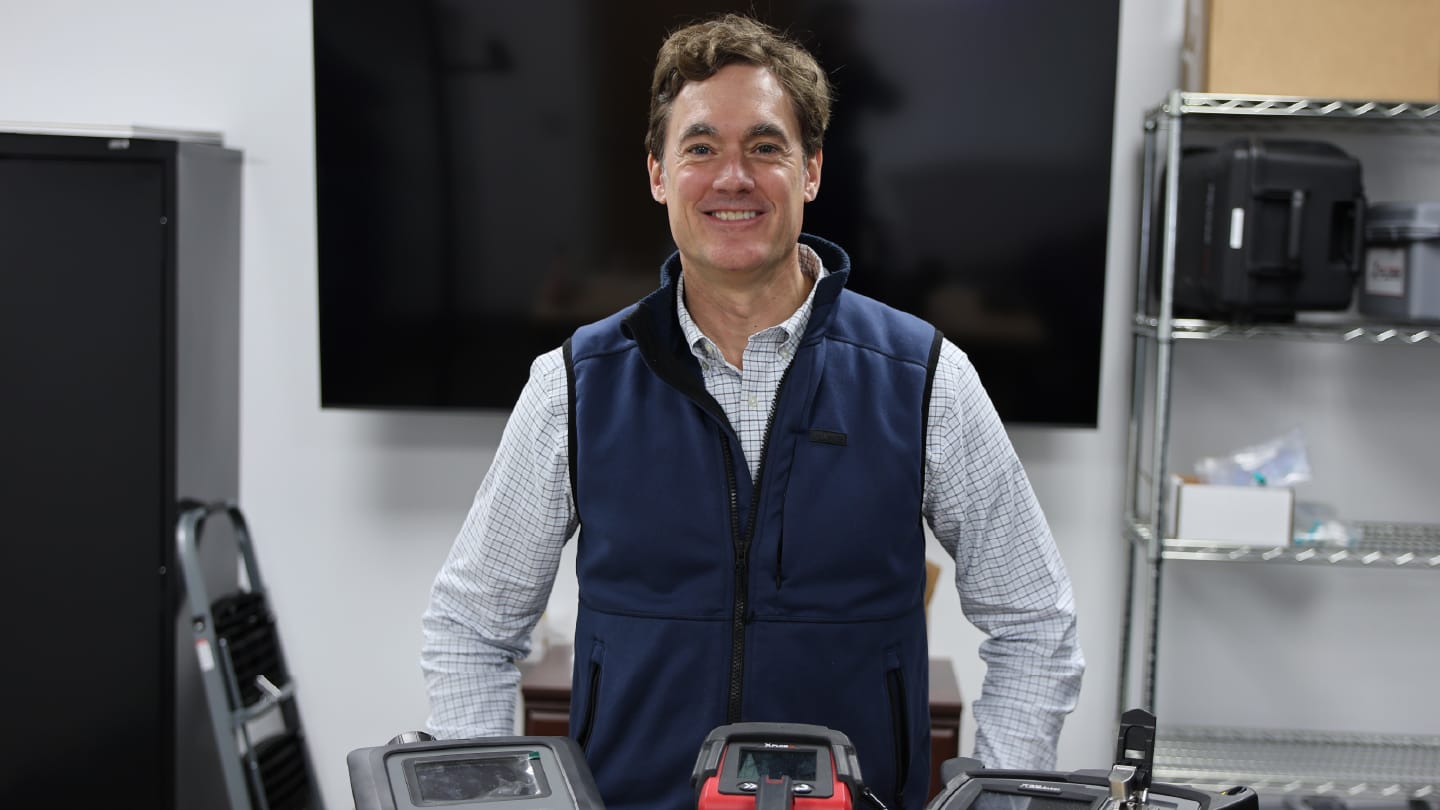
Sitting Down With… Kevin J. Knopp, Co-Founder and Chief Executive Officer at 908 Devices, USA.
Did you always want to be a scientist?
My passion for science began in high school, mainly through summer programs, and eventually led me to study engineering at Boston University. Even then, I found myself increasingly drawn to research – to the point that I tried to replace some of my traditional classes with research credits in graduate labs in physics and engineering.
I was interested in the applied side of engineering, but I also wanted to understand the underlying science: why we were doing something, what problem it addressed, and how it connected to more fundamental questions.
That became even clearer in graduate school, where I was fortunate to receive NASA sponsorship and work at NIST in Boulder, Colorado, just across the street from the university. It was an ideal environment for the kind of work I wanted to do. The national labs were especially influential for me because they sit at that intersection between foundational research and practical impact. They are doing serious science, but always with an eye on where it goes next, whether that is industry, the economy, or broader society.
That path suited me well. I enjoyed the science and the new thinking, but I was always drawn to the reasoning behind it, and how it could connect back to a practical application or device.
How did you first move into leadership?
It really began after graduate school. I had a postdoc that would have kept me on the research side, but I left it early to join Coretek, a company in Wilmington, Massachusetts, during the telecom boom. The work was closely aligned with my graduate research, and I joined an aggressively growing team of around 50 people, where I worked closely with the CTO. I was learning from people who were entrepreneurial and science-driven, but also deeply connected to the technology I had just spent six years studying.
In a fast-growing company, there is always too much work and not enough people. That creates opportunities, because if you have the energy and interest, you can take on problems that might otherwise sit untouched. For me, leadership grew out of that technical responsibility. As the company scaled, the work I was doing began to require more people around it. So rather than entering through a formal management track, my path into leadership emerged naturally as the technical work expanded, and I was able to take on more responsibility.
My formal education has always been rooted in science and engineering, and that has always been the foundation for any area I’ve been responsible for or helped lead. In many cases, leadership begins with someone having the knowledge and sense of direction to move an idea forward. Sometimes that means managing people directly, but often it means leading more collaboratively, setting a direction and bringing people with you.
That can be difficult, because you cannot rely on authority alone. You have to listen, communicate clearly, and make a convincing argument for the direction you believe is right. For me, that direction was always connected to technology, productization, and bringing the technical pieces together in a way that could become something practical.
The people-management and interpersonal skills came later, but leadership was always built around that technical backbone: the vision for the technology and the drive to move it forward.

How did you first find yourself in the analytical instrumentation business?
Originally, it came through the telecom world. My first job was focused on micro electromechanical (MEMs) tunable lasers where we focused on the design and development of a new class of lasers for telecom applications. But within 2 years of when I started, the telecom sector came under intense pressure, and major companies such as Nortel Networks, which had acquired the company I was working for, collapsed very quickly.
At the same time, there was a huge amount of talent in that space. A few of us then started Ahura Scientific, initially around telecom, because we had not yet realized how severe the downturn would become. We were building technologies that were effectively a generation ahead of the market, just as demand for the current generation was disappearing.
Our CEO and founder, Daryoosh Vakhshoori, drove our eventual pivot. It was a bold move. He had a strong technical understanding of what we had built and pushed us to look for opportunities beyond telecom. We had to in order to survive. Through that process, we found our way into analytical instrumentation – taking the capabilities we had built in optics, laser design, packaging and systems integration, and finding another area where they could meet a clear need.
That idea still shapes how I think about analytical instrumentation today. The goal is not only to make powerful technologies, but to bring them out of the lab and into the hands of people who need critical answers. That continued at 908, which we founded in 2012 to take mass spectrometry, as our first platform, out of the lab for trace detection.
What would you say has been your biggest motivator in your career?
For me, it has always been about impact. Over the past 25 years, almost every team I’ve worked with has been full of people trying to make a real difference. Of course, you also hope to bring a financial return to your investors, but fundamentally, you are trying to have an impact on whatever you are putting your effort into.
That connects back to my early days in research and engineering, where I would always question why I was studying a certain topic. Almost always, the answer was that it led to something else, something greater. Analytical instruments gave us an opportunity to open up those possibilities. At 908, with our focus on drug detection and public safety, that means addressing issues such as the opioid epidemic or carcinogen exposure for firefighters – that’s impact.
And that kind of need naturally creates scientific curiosity. You start asking how to make the technology smaller, simpler, and affordable enough to be useful in the field. In our case, one of the foundational questions was whether we could make mass spectrometry work at higher pressures, and in doing so remove the need for a large pumping system.
Those goals drive people to think carefully about the product that will best serve a particular group of customers, because those people deserve tools that genuinely serve their needs. It gives you focus, and once you start to see your work translated into a real difference in people’s lives, it is incredibly empowering.
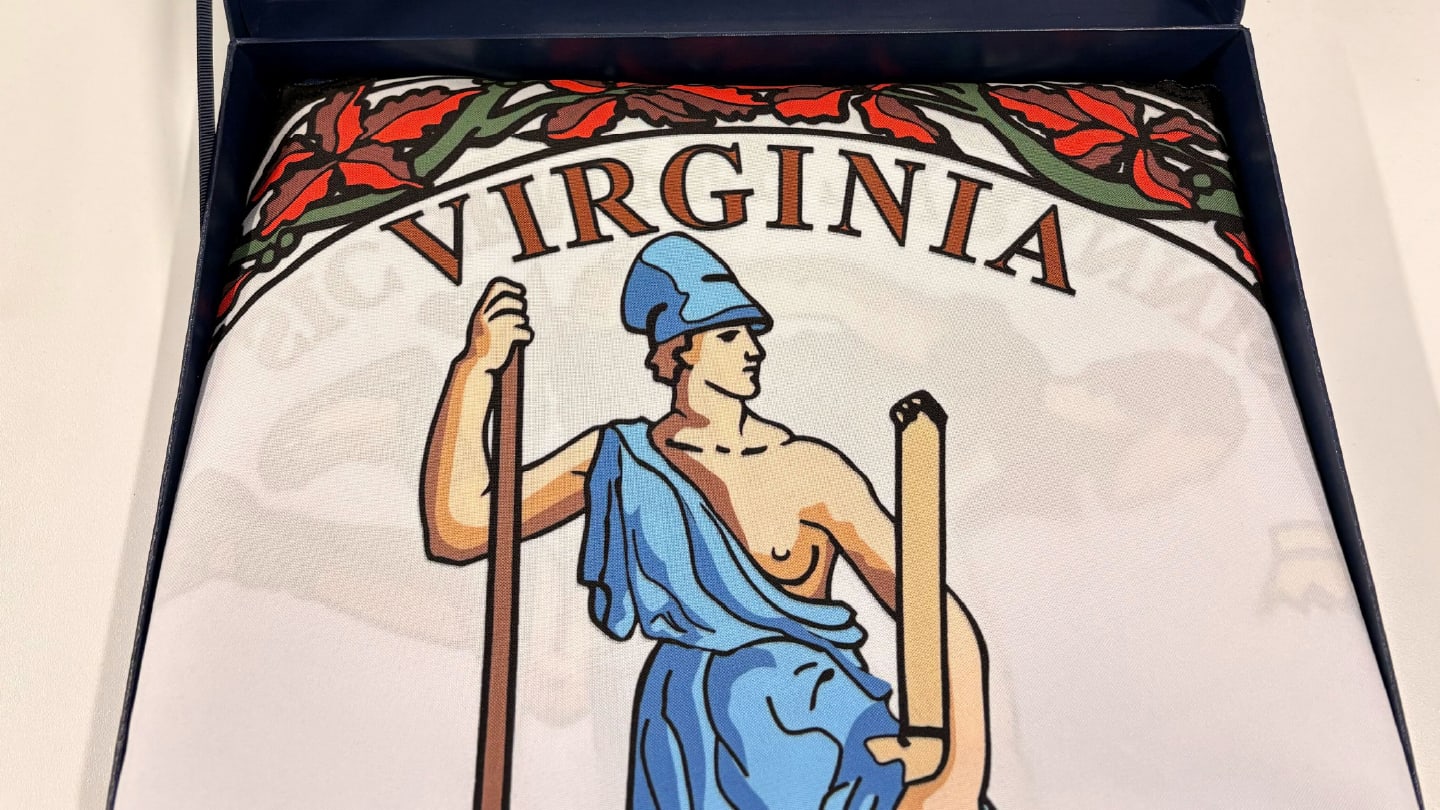
We were recently very fortunate to receive a flag from the Commonwealth of Virginia that had been flown above the Statehouse in honor of our product. They felt we were creating a tool that was having a positive impact in reducing overdose deaths in public safety and Department of Corrections systems in Virginia.
Being able to show that to the company and say, “No matter your position, you helped create, support, sell, or build something that has enabled our customers to save lives ” – that is the motivator.
You’ve worked at companies that have transitioned from smaller start-ups to more mature, larger organizations. How do you keep the mindset of innovation over time?
In many ways, this relates back to that continued focus on the customer. We divested our desktop devices about a year ago, and our focus today is fully on handheld devices – all serving customers in health, safety, and defense applications. Serving those customers gives us a very clear purpose.
We have a fantastic customer success group, with people working across early applications, support, service, and training. We do hundreds of customer training days each year, giving us a chance to show people different tools and technologies in practical settings. For us, those conversations are as much about listening as they are about training. We share what we know with our customers, but we also learn a lot from them.
The scale changes, but the principle remains the same. Whether you are a handful of people trying to make mass spectrometry serve a real-world need, or a much larger company expanding from one handheld product to five, you have to stay close to the people using the technology. That connection drives curiosity, urgency, and innovation, but in a way that is directed toward something useful.
Do you have any secrets to building an innovative team?
The most important aspect – and one that I’ve been very fortunate with – is having great people.
We make a concerted effort to hire talented, well-rounded individuals who are not only sharp in their disciplines, but also gifted communicators with real humility. People who are open and willing to share their expertise are incredibly important, particularly when working in smaller teams.
And this all connects back to leadership. Whether people report to you directly or work alongside you collaboratively, the group still has to function as a team. It’s like passing a ball on a basketball court: you have to know where people are going to be, what their strengths are, where they may need support, and how things are developing in real time. If that communication breaks down, ultimately the ball gets dropped.
That is why the people matter so much. You need individuals who are extremely capable, but who are not interested in empire-building. They have to want a flat organizational structure where people can create something together and recognize where others can contribute.
I know “team” can be an overused word, but that is really the definition for me: good people who are incredibly capable, and share the same passion for impact and for the customers we serve.
If you think back on your career so far, is there any single thing you’d say you’re most proud of?
To me, it’s very exciting to look at the impact you can have by building a team, creating opportunities, and developing tools that serve a real need. We have around 200 people now at 908, all sharing that same passion to serve our customers. Carcinogen exposure, and cancer more broadly, remains one of the defining health risks facing career firefighters, and the effects of the opioid epidemic continue to broaden. Having a dedicated team working on those critical health and safety issues is something I’m incredibly proud of.
What is the biggest lesson you’ve learned in your career?
Every day is a lesson learned – it’s part of what keeps me in the seat here. Across all of it, consistency comes from having a hardworking, high-functioning team of people who can work well together. Otherwise, it becomes very easy to waste time because the connections between people, teams, or priorities are not as strong as they need to be. Sometimes that leads to tough decisions, whether that means reorienting, restructuring, moving people along, or something else.
That organizational fabric is something you build, but it is also something you have to keep rebuilding as you scale. Ultimately, culture has to support the mission. People need to see the impact, understand their role in it, and understand how their work affects the customer.
For me, the biggest lesson has been the need to keep focusing on people. Technology matters, of course, but you can have the best technology in the world and still struggle if you do not have a team that is passionate about bringing it to market, supporting customers, and listening for what should come next. I have been very fortunate to have great mentors and teachers over my career and to work with so many passionate and dedicated individuals.
Looking ahead, what are you most excited about over the next three to five years?
If I think about 908’s journey over the past 14 years, every year has been exciting in its own way. But the strategic transformation we made about a year ago feels especially important. Today, we have a team and portfolio fully focused on public health, safety, and defense applications, built around handheld tools that provide chemical intelligence in the field.
I think we are just getting started. As you build scale, and with nearly 4,000 devices now in the field, you also build the structure to learn from customers more effectively. If you have that customer intimacy, they will tell you what they need and where your R&D investment should be going.
The important thing is that we now have the means to respond. We can bring multiple technology platforms together to address those needs.
That is what makes this so exciting. With the strategic shift we made, we are more focused, and we can spend our time with customers facing real problems. I’m very excited about the future impact that will come from that.
Newsletters
Receive the latest analytical science news, personalities, education, and career development – weekly to your inbox.