For more than a decade, surface-enhanced Raman spectroscopy (SERS) has been used to analyze serum and plasma for disease diagnosis. Its appeal lies in the combination of minimal sample preparation, rapid analysis, and rich spectral information – all obtained from just a few microliters of biofluid. With portable, miniaturized Raman spectrometers now widely available, SERS offers the tantalizing possibility of diagnosing disease from a single drop of blood – potentially even outside the clinical setting.
However, spectral data from untargeted SERS analysis of biofluids are only valuable if they are correctly interpreted: each band must be reliably assigned to a specific biomolecule. And this is where Roberto Gobbato and colleagues from the University of Trieste’s Raman Spectroscopy Lab, Italy, spotted a problem. In 2014, they realized that many of the spectral profiles in the literature that had been attributed to a wide variety of molecules were, on closer inspection, identical to uric acid and hypoxanthine – small purine metabolites abundant in blood serum that bind strongly to silver surfaces and therefore dominate untargeted SERS spectra.
“Over the years, papers using untargeted SERS on serum continued to proliferate, yet most still presented biochemical interpretations that conflicted with our findings,” say the researchers. “We trusted our data and recognized that many studies relied on interpretative approaches we considered methodologically flawed.”
The researchers initially attempted to contact the authors of those papers, and later tried to submit formal comments – but these efforts had little impact. “This left us increasingly concerned – and somewhat powerless – as the misinterpretation persisted,” they say. “It became clear that a more effective strategy would be to publish a dedicated paper outlining the methodological issues we had identified and presenting strong evidence supporting our interpretation.”
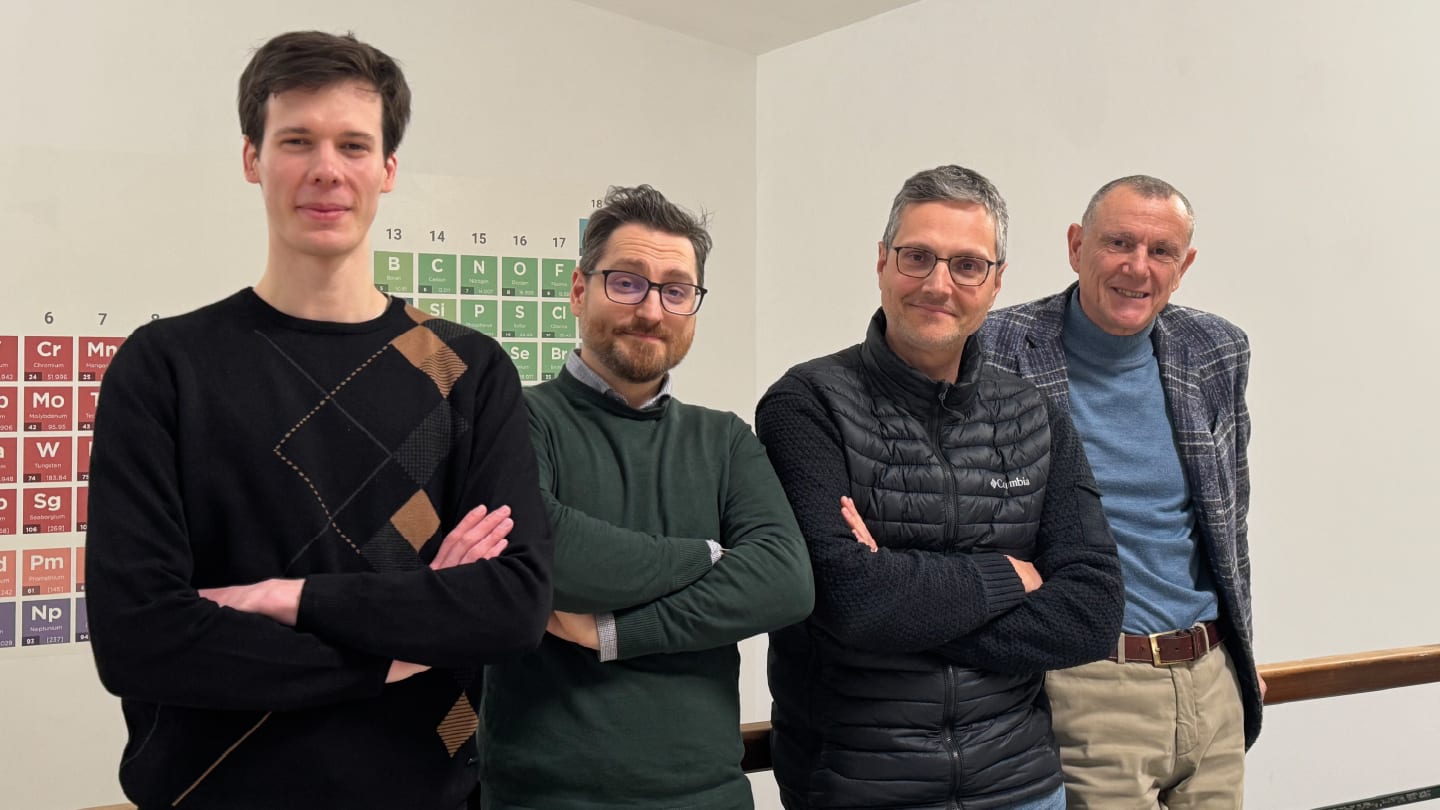
The team ultimately embarked on what they describe as a scientific detective story: tracing the true molecular origins of serum SERS spectra and uncovering how misinterpretations had propagated through the literature for so long. To understand how they unraveled the problem – and what it means for SERS and analytical science more broadly – we spoke to the four co-authors: Roberto Gobbato, Stefano Fornasaro, Valter Sergo, and Alois Bonifacio.
How did you go about investigating – and ultimately clarifying – what the major contributors to serum SERS spectra actually are?
Our starting point was the realization – based on a careful review of the literature – that methodological issues were undermining the reliability of many published band assignments in serum SERS studies. With that in mind, we approached our own hypothesis with caution. Although we suspected that most serum SERS bands might originate from only a few metabolites, primarily uric acid and hypoxanthine, we first assumed that this hypothesis might be wrong and asked how we could rigorously test alternative possibilities using multiple, independent experimental strategies.
Our first step was a direct comparison: we collected SERS spectra of all metabolites cited in the literature at physiologically relevant concentrations and compared them with the serum spectrum. Only a few metabolites produced any detectable SERS signal, and among them, only uric acid and hypoxanthine displayed spectral patterns compatible with those of serum.
However, we recognized that this approach did not account for potential matrix effects. Other serum components – such as salts or biomolecules – could, in principle, promote the adsorption of metabolites that were not detected when analyzed as pure. To address this, we spiked serum samples with each candidate metabolite and monitored whether any spectral bands increased. Again, only uric acid and hypoxanthine produced clear and reproducible changes in the serum spectrum.
We then considered the possibility that weaker bands from other biomolecules might simply be masked by the dominant contribution of uric acid. To test this, we took the opposite approach: we selectively depleted uric acid from serum using a specific degrading enzyme and tracked how the spectrum responded. The effect was striking: most bands were dramatically reduced, leaving essentially only those associated with hypoxanthine.
Up to this point, all results had been obtained using a single commercial batch of serum, likely derived from one donor. Although its spectrum resembled those reported for hundreds of patients in the literature, we wanted to assess whether inter-individual metabolic variability might reveal contributions from additional metabolites. To that end, we analyzed serum samples from 81 blood donors. By examining correlations among bands, modelling spectral variability, and evaluating overall signal patterns, we confirmed that all detectable bands could be attributed to uric acid and hypoxanthine – and that roughly 90 percent of the spectral variability was associated with these two metabolites alone.
What were the biggest challenges you encountered as you worked to untangle the interpretation problem?
One major challenge was unraveling the complex web of citations to identify the true original sources. Much of the difficulty arose because many papers relied on indirect evidence: authors justified band assignments by citing earlier studies that had proposed the same assignments – not on the basis of solid experimental data, but simply because previous authors had done so. We manually compiled and traced every citation associated with each metabolite – from papers published in the 1970s up to the present – to determine where and how the misinterpretations had first arisen. At times, the process felt like a scientific detective story, complete with a mental “whiteboard” of clues connected by red strings.
A second challenge involved designing rigorous and independent experiments to test our hypothesis that most of the bands in serum SERS spectra arise from only a small number of metabolites: primarily uric acid and hypoxanthine. Developing complementary experimental strategies capable of confirming or refuting this idea required considerable effort and careful planning.
What did your analysis reveal about why different research groups were arriving at such different biochemical interpretations?
Our analysis showed that the wide variation in biochemical interpretations largely stemmed from mistakes due to methodological issues and to an incomplete understanding of how SERS actually works.
First, many researchers did not fully appreciate the fundamental differences between normal Raman and SERS spectra of the same biomolecule. SERS is a surface technique, and its spectral features depend not only on the analyte, but also on its adsorption geometry and the plasmonic properties of the metal nanostructure. Nevertheless, many groups treated Raman and SERS spectra as interchangeable and used Raman bands alone to justify SERS band assignments – an approach that is not sufficiently robust.
Second, band assignments were often based on the presence of a single peak at a similar Raman shift in both serum and a candidate metabolite, while ignoring the overall spectral pattern. In many cases, other strong bands characteristic of that metabolite were absent in the serum spectrum, but this inconsistency was overlooked. This selective focus on confirming evidence – essentially a form of “cherry-picking” – led to unreliable biochemical interpretations.
A third issue involved underestimating the role of metal-analyte binding affinities in shaping SERS spectra of complex mixtures like serum. Because SERS is dominated by surface interactions, molecules with high affinity for the metal substrate (for example, silver) contribute disproportionately to the spectrum, regardless of their actual concentration. Just a few high-affinity metabolites can overshadow thousands of lower-affinity components.
Finally, many interpretations relied heavily on indirect evidence – such as accepting previously published band assignments without scrutinizing how those assignments were originally made. This uncritical propagation of questionable interpretations contributed significantly to the heterogeneity observed in the literature.
Were there any results that genuinely surprised you as the evidence came together?
One of the most surprising findings was the marked change in the spectral pattern of uric acid when it binds to human serum albumin. This was a key discovery, as it finally allowed us to explain an intense serum SERS peak that had remained puzzling for years. We found this result particularly compelling because it underscores the crucial role of molecular interactions – both among components within the biofluid and between those components and the nanoparticle surface – in shaping SERS spectra. This aspect is often overlooked or not considered at all. It served as a clear example of just how complex SERS of biofluids can be.
What is the key message you hope researchers take away when performing serum SERS analysis going forward?
In general, we believe that untargeted SERS analysis of biofluids has tremendous potential – provided that researchers across the field commit to rigorous and methodologically sound practices. The realization that only a small number of metabolites, out of the thousands present in serum, actually generate detectable SERS signals may seem disappointing at first. However, once this is acknowledged, it becomes possible to focus efforts more effectively.
Researchers can concentrate on conditions in which uric acid and hypoxanthine are already known to serve as informative biochemical markers. Kidney, liver, and cardiovascular diseases are notable examples, and malaria is another particularly relevant case. By aligning SERS applications with diseases where these metabolites carry diagnostic value, the field can progress in a more focused, reliable, and ultimately impactful direction.
Moreover, we hope that future SERS studies – not only on serum, but on all biofluids – will place much greater emphasis on the biochemical interpretation of spectral data. It is essential to understand the molecular origin of each spectral peak; overlooking this aspect can seriously compromise the technique’s reliability and ultimately hinder its translation into clinical or diagnostic applications.
Do the challenges you identified point to broader issues facing analytical science?
Yes. We believe that the pressure to publish affects analytical scientists just as much as researchers in any other field. This pressure often compresses the time and careful thinking required for truly solid investigations, shifting the emphasis toward obtaining results rather than understanding the principles behind them.
Analytical scientists should remain mindful that overlooking the fundamental aspects of a technique – its limitations, assumptions, and biochemical underpinnings – inevitably leads to unreliable outcomes. When this happens, it undermines confidence not only in individual studies but also in the discipline as a whole. Rigour and methodological clarity are therefore essential to preserving trust in analytical science.
Policy makers should recognize this issue and work to reduce the pressure to publish, promoting a focus on fewer studies of higher quality rather than a larger quantity of rushed publications.
Newsletters
Receive the latest analytical science news, personalities, education, and career development – weekly to your inbox.