Conexiant
Login
  • The Analytical Scientist
  • The Cannabis Scientist
  • The Medicine Maker
  • The Ophthalmologist
  • The Pathologist
  • The Traditional Scientist
The Analytical Scientist
  • Explore

    Explore

    • Latest
    • News & Research
    • Trends & Challenges
    • Keynote Interviews
    • Opinion & Personal Narratives
    • Product Profiles
    • App Notes
    • The Product Book

    Featured Topics

    • Mass Spectrometry
    • Chromatography
    • Spectroscopy

    Issues

    • Latest Issue
    • Archive
  • Topics

    Techniques & Tools

    • Mass Spectrometry
    • Chromatography
    • Spectroscopy
    • Microscopy
    • Sensors
    • Data and AI

    • View All Topics

    Applications & Fields

    • Clinical
    • Environmental
    • Food, Beverage & Agriculture
    • Pharma and Biopharma
    • Omics
    • Forensics
  • People & Profiles

    People & Profiles

    • Power List
    • Voices in the Community
    • Sitting Down With
    • Authors & Contributors
  • Business & Education

    Business & Education

    • Innovation
    • Business & Entrepreneurship
    • Career Pathways
  • Events
    • Live Events
    • Webinars
  • Multimedia
    • Video
    • Content Hubs
Subscribe
Subscribe

False

The Analytical Scientist / Issues / 2026 / February / How Lead Exposure Changed Over a Century
Environmental Environmental News and Research

How Lead Exposure Changed Over a Century 

Hair-based mass spectrometry links declining lead exposure to environmental regulation 

02/17/2026 2 min read

Share

A century’s worth of archived human hair has revealed a clear chemical record of how lead exposure surged during industrialization and collapsed after environmental regulation took hold in the United States. The study shows that average lead concentrations fell by nearly two orders of magnitude following the creation of the US Environmental Protection Agency and the phase-out of leaded gasoline. 

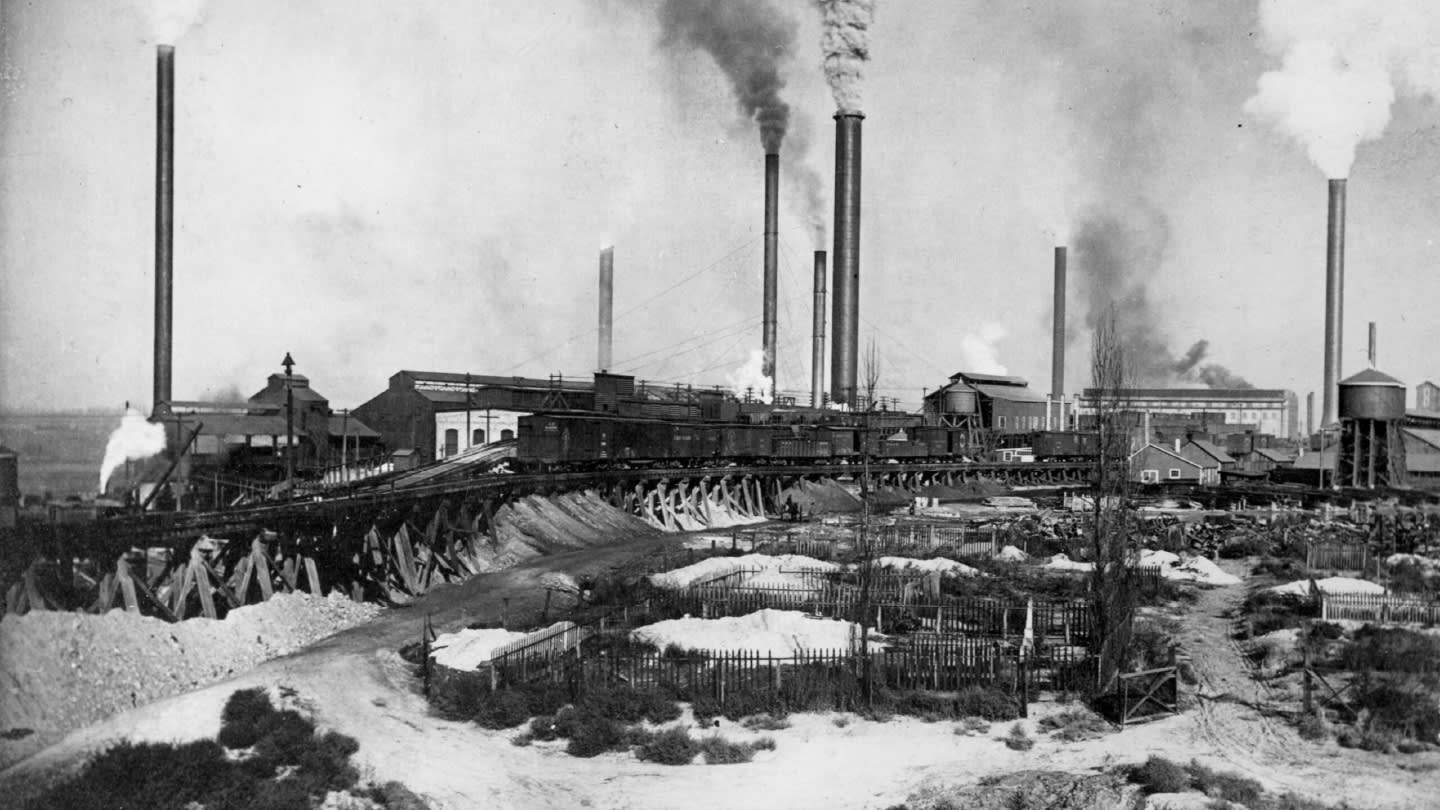
The study, led by scientists at the University of Utah, examined hair samples collected from residents along Utah’s Wasatch Front between 1916 and 2024. The area experienced sustained industrial lead emissions from smelting operations throughout much of the twentieth century, and also maintains extensive family and biological archives.

To reconstruct long-term exposure, the researchers analyzed paired hair samples from 48 individuals, including material collected in adulthood and hair preserved from earlier life stages, sometimes kept in family scrapbooks. Hair samples were chemically cleaned, digested in nitric acid, and analyzed for lead content using inductively coupled plasma triple quadrupole mass spectrometry, which enabled sensitive quantification from as little as a single strand.

The results revealed consistently high lead concentrations in hair prior to 1970, with values commonly ranging between 30 and 100 parts per million. Following the introduction of federal environmental regulations, including restrictions on leaded gasoline, concentrations declined sharply – falling to around 10 ppm by the 1990s and to below 1 ppm in samples collected after 2020.

“We were able to show through our hair samples what the lead concentrations are before and after the establishment of regulations by the EPA,” said Ken Smith, a co-author of the study, in a press release. “Back when the regulations were absent, the lead levels were about 100 times higher than they are after the regulations.”

Lead accumulates at the surface of hair and is not readily lost, making it a stable substrate for retrospective exposure analysis. “Because mass spectrometry is very sensitive, we can do it with one hair strand,” said Diego Fernandez, who oversaw the analytical measurements.

The authors emphasize that the findings underscore the long-term impact of environmental regulation. “We should not forget the lessons of history,” said co-author Thure Cerling. “Those regulations have been very important, and they’ve had really positive effects.” 

Newsletters

Receive the latest analytical science news, personalities, education, and career development – weekly to your inbox.

Newsletter Signup Image

False

Advertisement

Recommended

False

Related Content

 This Week’s Mass Spec News
Environmental
This Week’s Mass Spec News

April 4, 2025

2 min read

The Climate Conversation: Part Two – Michael Gonsior
Environmental
The Climate Conversation: Part Two – Michael Gonsior

December 5, 2024

7 min read

In the second part of our interview, Michael Gonsior explores the pressing challenges in carbon cycle research, transformative tools and technologies, as well as analytical glimmers of hope

More Bang for Your Buck
Environmental
More Bang for Your Buck

December 4, 2024

1 min read

Researchers develop more stable catalysts for dry reforming of methane – a promising method for carbon capture and utilization (CCU)

Portable PFAS Profiling
Environmental
Portable PFAS Profiling

December 13, 2024

1 min read

Using nanopore technology, Chang Liu and Xiaojun Wei discuss their accessible and inexpensive new option for detecting “forever chemicals” PFAS

False

The Analytical Scientist
Subscribe

About

  • About Us
  • Work at Conexiant Europe
  • Terms and Conditions
  • Privacy Policy
  • Advertise With Us
  • Contact Us

Copyright © 2026 Texere Publishing Limited (trading as Conexiant), with registered number 08113419 whose registered office is at Booths No. 1, Booths Park, Chelford Road, Knutsford, England, WA16 8GS.