Please tell us a bit about yourself
I am a postdoctoral researcher at the University of Geneva, with a background in forensic sciences and a PhD focused on biomarker discovery and endogenous peptide quantification by LC-MS/MS.
My colleagues would probably describe me as the lab’s chef, and I genuinely believe that gastronomy and analytical chemistry have a lot in common. Both require precision, creativity, intuition, and a deep understanding of how ingredients interact. In the lab, as in the kitchen, small adjustments can completely transform the final result. My motto is simple: whether it’s peak distortion or surface-associated mRNA, the discussion is always better over homemade ice cream.
Tell us about your work with Sanofi and Waters
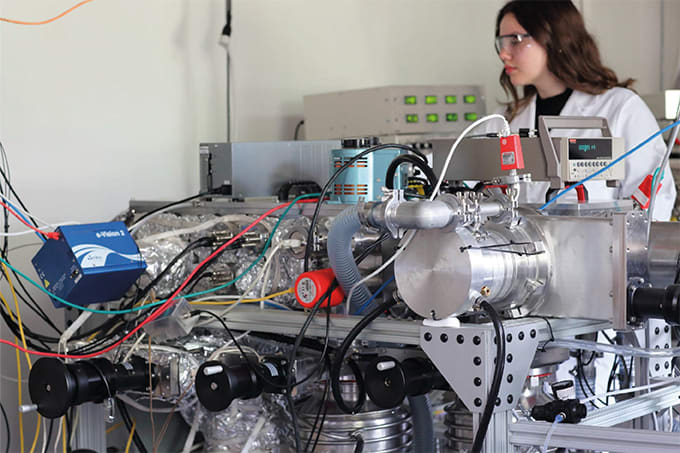
My research focuses on addressing analytical challenges related to next-generation mRNA-LNP drug products. In collaboration with Sanofi, we receive real pharmaceutical samples and develop advanced methods to assess key quality aspects such as mRNA integrity, encapsulation, and lipid-related characteristics.
Our close partnership with Waters allows us to work with prototype columns and explore new separation strategies beyond what is commercially available. What excites me most about this project is the alignment between academia and industry. We are all working toward the same goal: making better analytical tools for tomorrow’s medicines. At the same time, we still have the freedom to dive into fundamental questions, especially regarding how oligonucleotides and mRNA behave chromatographically.
How did you get involved in this area of research?
From the very beginning of my studies, I knew that research was where I belonged. I quickly became fascinated by the power of LC and MS to answer complex and seemingly unsolvable questions. After working in forensic science and then clinical research, I felt ready to apply those tools to new challenges within pharmaceutical sciences.
I met Davy Guillarme at a conference in Ankara, and we immediately connected. A few months later, he offered me a position in his group, which I accepted without hesitation. Knowing that our analytical developments may contribute, even indirectly, to shaping future medical treatments is what motivates me every day.
Why HTC?
Although I have attended several major conferences such as HPLC and ISC, this will be my first time at HTC, and that is precisely why I am particularly looking forward to it. HTC has a strong reputation for bringing together both fundamental and applied scientists in a very focused and dynamic setting.
What I appreciate about conferences of this scale is the balance between high-level science and interaction with people. Beyond the presentations, it is the discussions in the corridors, the exchange of ideas, and the unexpected conversations that often make the biggest impact.
I strongly believe that science progresses through openness and collaboration. In that respect, my supervisor, Davy Guillarme, is a great example. He actively fosters connections between academia and industry and encourages scientific exchange at every opportunity.
Tell us about your upcoming talk at the conference
My talk focuses on understanding how HILIC actually works for oligonucleotides. Although this chromatographic mode is increasingly used for nucleic acid analysis, its retention mechanism is still not fully understood.
In our work, we challenged a widely accepted assumption about HILIC. Instead of the traditional water-layer model being dominant, we found that other interactions play a much more important role in the retention of nucleic acids. This shift in perspective has very practical implications for method development.
One of the most surprising findings? Using methanol instead of acetonitrile in HILIC can significantly improve selectivity. Sometimes, revisiting basic assumptions leads to the most impactful discoveries.
What’s next for your research?
Over the past two years, we have deeply explored the analytical challenges surrounding mRNA, including integrity and encapsulation. But mRNA is only one part of the story. The next step is to better understand the lipid nanoparticle carriers themselves.
We are now working on developing platform methods to analyze complex lipid mixtures and their impurities in drug products. To do this efficiently, we are integrating advanced machine learning strategies to fine tune the separation.
Ultimately, our goal is to better understand the intricate interactions between lipids and mRNA and to contribute to the development of the next generation of therapeutic systems.
The 19th International Symposium on Hyphenated Techniques in Chromatography and Separation Technology (HTC-19) will take place from May 26–29, 2026, in Leuven, Belgium. Find out more at: https://htc-19.com/
Newsletters
Receive the latest analytical science news, personalities, education, and career development – weekly to your inbox.