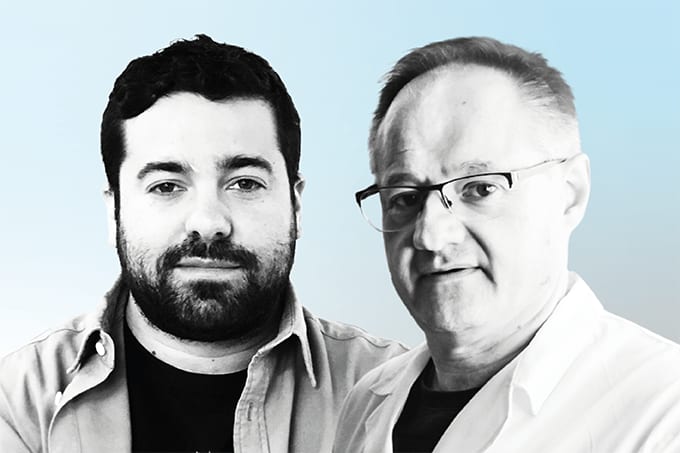
Our lab is heavily underpinned by mass spectrometry (MS) coupled to separation techniques including liquid (LC), gas (GC) and supercritical fluid chromatography (SFC). However, efficient sample preparation is a core gateway to wider characterisation and monitoring capability. For example, careful development and optimisation of extraction workflows has recently underpinned the delivery of projects in our laboratory focussing on identification and risk assessment of new disinfectant by-products and per- and polyfluorinated alkyl substances (PFAS) in drinking water in homes across London (1), and also running intensive surface water and wastewater projects for emerging contaminants including drugs, pharmaceuticals, personal care products, pesticides and other chemicals (2).
Many of our projects work at very large spatio-temporal scales and this brings its own challenges ranging from simple filtration to more extensive extraction and sample cleanup requirements. We often test several thousand water, soil or air samples in each project and this now requires high throughput methods for hundreds of chemical residues at the nanogram per litre concentration level using both targeted and on targeted monitoring techniques. Solid phase extraction is still a key technique for us, but we only use it where we need sub nanogram per litre sensitivity. This has been particularly important for our wastewater work, where we routinely monitor very potent and sometimes new illicit substances such as opioids to help provide an early warning system for drug authorities. Generally, however, and for water and/or liquid samples, we have benefitted from the recent gains in LC-MS sensitivity and developed SPE-free methodologies opting for direct injection analysis after sample filtration to 0.2 microns (3). While this may sound simple, when we operate at such large scales and to tight deadlines, this becomes difficult to execute efficiently and robustly, especially where samples contain suspended particulate matter that can easily block filters!
Meet the Author
I completed an honours bachelor's degree in Analytical Science in 2001 and a PhD in Analytical Chemistry in 2005 both from Dublin City University (DCU), Ireland, focussing on solid phase extraction and ion exchange chromatography-mass spectrometry of disinfectant by-products in drinking water. Thereafter, I pursued four years as a postdoc at DCU and at the Norwegian Institute for Water Research (NIVA) studying pharmaceuticals in our environment and developing new methods to detect them in sludge. Following that, I took up my first academic appointment at King's College London as a Lecturer in Forensic Science in 2009, which gave me a solid grounding in how to develop high confidence analytical methods for trace chemical measurement.
Sixteen years later, I am now Professor of Analytical and Environmental Sciences at Imperial College London within the School of Public Health. I lead a research group focusing on chemicals in our environment: how to detect them, monitor them and prioritize which ones are a risk to us and the environment. We run several different projects focusing on “One Health,” including environmental monitoring, toxicology, risk assessment and health impacts of chemicals both on the individual and population level.
[box out]
Extraction innovation
In my view, one of most important recent developments in sample preparation is the shift toward miniaturised, greener, and more integrated extraction techniques. Traditional methods can be solvent-intensive and time-consuming, while newer approaches such as solid-phase microextraction and liquid-phase microextraction are faster, cleaner, and more sustainable. We recently used robotic platforms to help extract, spike, and filter complex environmental water samples at high throughput, to underpin both large monitoring campaigns and citizen‑science projects such as the 2025 Earthwatch Great UK Water Blitz (https://earthwatch.org.uk/greatukwaterblitz/). We were also able to assess the sustainability of our methods (both manual and automated), particularly regarding single-use pipette tips and showing that they could be cleaned and reused for trace analysis (4). Eleven washing solvents were screened and evaluated using the AGREEprep framework, as well as analytical performance, tip integrity, and life cycle assessment (LCA). A four‑wash protocol achieved >98 percent carryover reduction, with ethanol:water providing the best balance of cleaning efficacy, low global warming potential, and minimal tip damage.
Last year at ExTech I spoke about our novel miniaturized 3D-printed passive samplers (5), which contain up to five separate sorbents and are a very low cost solution for monitoring in large scale projects. Reducing the size of passive samplers has massively impacted our entire workflow as well as the resources required to calibrate, analyze and store deployed devices. We have now developed PFAS-suitable materials for these samplers to go alongside our SPE-enhanced and direct injection LC-MS/MS and SFC-HRMS methodologies for more comprehensive characterisation of PFAS in our environment, but importantly, their occurrence in context with over a thousand other emerging contaminants. These little devices are now at a point where they are in use by community groups (6) to measure chemical contaminants affecting their waterways, including tyre wear markers (e.g., PPD-type materials) and pet parasiticides (e.g., fipronil and imidacloprid). We have just completed a very detailed application where we can “proxy” chemical concentrations on these 3D-printed passive samplers to exposure in benthic invertebrates in freshwater rivers, hopefully reducing the need for active biomonitoring or sacrifice of aquatic specimens (7).
We also perform large scale bioanalysis of environmental flora and fauna, but also of human samples. Our new project “Understanding the UNderstanding the Scale, Sources, Fate and Effects of PFAS pollution (UNSaFE)” focuses on the impacts of “forever chemicals” on freshwater species at a national scale. For biological samples, many of our analytical methods include several optimised sample preparation steps including lyophilisation, liquid extraction, dual sorbent SPE and filtration before LC-MS/MS and LC-high resolution accurate mass spectrometry (HRMS) (8,9,10). We are now moving into the human biomonitoring space, particularly to understand the risks of chemical pollution to water users. In the UK, currently there are no rivers that have good chemical status. This has raised significant concerns among the general public regarding whether it is safe to “wild swim.” In terms of sample preparation, we have to be ready for a wide range in freshwater sample complexity from those that are cleaner and relatively uncontaminated to those which bear signatures similar to wastewater. Good sample preparation has a strong impact on method performance across this space, as well as being able to causally link chemical occurrence “fingerprints” in biological fluids to exposure during swimming. Balancing the scope of chemical coverage with quantitative measurement consistency and robustness is therefore a challenge. In addition to environmental science, we are actively engaged in the forensic and security sciences space.
A “go-to” conference
I am excited to attend ExTech this year and it is a “go-to” conference for my research team to engage with vendors, industry and academic collaborators to better understand the opportunities in the sample preparation space. My keynote lecture at ExTech 2026 is entitled “Beyond the Trace: Sustainable Environmental Sample Preparation and Micropollutant Analysis at Scale”. In this talk, I will focus on how we can design and implement sample preparation workflows that are not only sensitive and robust, but also scalable and environmentally sustainable, particularly for large national and citizen science monitoring campaigns. The wider programme focuses on the key challenges and current solutions in this space, including greener and more sustainable methods, miniaturised and automated extraction, advanced materials, and tighter integration with mass spectrometry and other analytical tools. It also showcases how sample preparation is central to solving real problems in exposomics, environmental pollution, food analysis, pharmaceuticals, and bioanalysis. What makes this especially compelling is that the conference treats sample preparation not as a routine first step, but as a critical driver of analytical quality, scientific insight, innovation, and more reliable understanding of complex samples. Personally, I am particularly interested in how the automation space is evolving and I was excited to learn about new technologies at the visit to Gerstel’s factory during the Extech conference in Mülheim an der Ruhr last year. As a research laboratory, we have only transitioned to large-scale analytics to support our work in the past five years as automated platforms were not always needed before that. Much of our environmental measurement work is used in public health and environmental impact assessment, which requires large datasets. As we become more integrated across disciplines and sectors, the landscape even for a university-based analytical laboratory has changed immensely. We need to move with the times to remain competitive and to ensure that we are tackling the biggest global challenges with the right tools.
As Chair of the Royal Society of Chemistry (RSC) Separation Science Interest Group (SSG), ExTech2026 showcases our partnership with RSC-led sessions and bursary funding to enable early and established career scientists from both academia and industry in the UK to engage with our European colleagues. We have talks showcasing green sample preparation, maximising the measurable non-target chemical space, microsampling/microextraction and new extraction materials. The training and availability of practically-skilled analytical scientists to support critical capability development reliant on separations is particularly important for us. As part of SSG, we hope that our partnership at ExTech 2026 will invigorate collaboration at a fundamental level, and especially within the sample preparation space.
ExTech 2026: At a Glance
By Giorgia Purcaro, Chairwoman, ExTech, Gembloux Agro-Bio Tech, University of Liège, Belgium
ExTech 2026 – the 28th International Symposium on Advances in Extraction Technologies – will take place July 6–9, 2026. Focused on sampling and sample preparation, the meeting brings together researchers, instrument manufacturers, and industry to explore advances shaping extraction science.
Launched in 1999 by Professor Janusz Pawliszyn, ExTech has developed into a global forum for developments in extraction technologies, spanning fundamentals, new materials, miniaturization, automation, sustainability, and analytical workflows. The 2026 program will place particular emphasis on hyphenated techniques, direct MS, and the growing role of artificial intelligence.
The meeting will feature scientific sessions, short courses, and networking opportunities across areas including environmental analysis, food safety, bioanalysis, green chemistry, and industrial applications. ExTech 2026 is supported by EuChemS, SCI, AfSep, and the RSC, and includes awards and scholarships for early-career researchers.
Key dates:
Poster abstract submission: May 1, 2026
Early-bird registration: May 1, 2026
More information: https://www.extech2026.uliege.be/
Newsletters
Receive the latest analytical science news, personalities, education, and career development – weekly to your inbox.
References
- 1. D. Ciccarelli et al., Journal of Hazardous Materials, 448 (2023).
- 2. M Egli et al., Environment International, 180 (2023).
- 3. KT Ng et al., Journal of Hazardous Materials, 398 (2020).
- 4. A Vaughan et al., RSC Sustainability 3, 5470-85 (2025).
- 5. AK Richardson et al, Science of the Total Environment, 839 (2022).
- 6. AK Richardson et al., npj Emerging Contaminants, 2, 1 (2026).
- 7. AK Richardson et al., Environmental Science: Processes and Impacts, 28, 42-55 (2026).
- 8. TH Miller et al., Environment International, 129, 595-606 (2019).
- 9. TH Miller et al., Environmental Pollution, 270 (2021).
- 10. AE Lindell et al., Nature Microbiology. 2025, 10, 1630-47.