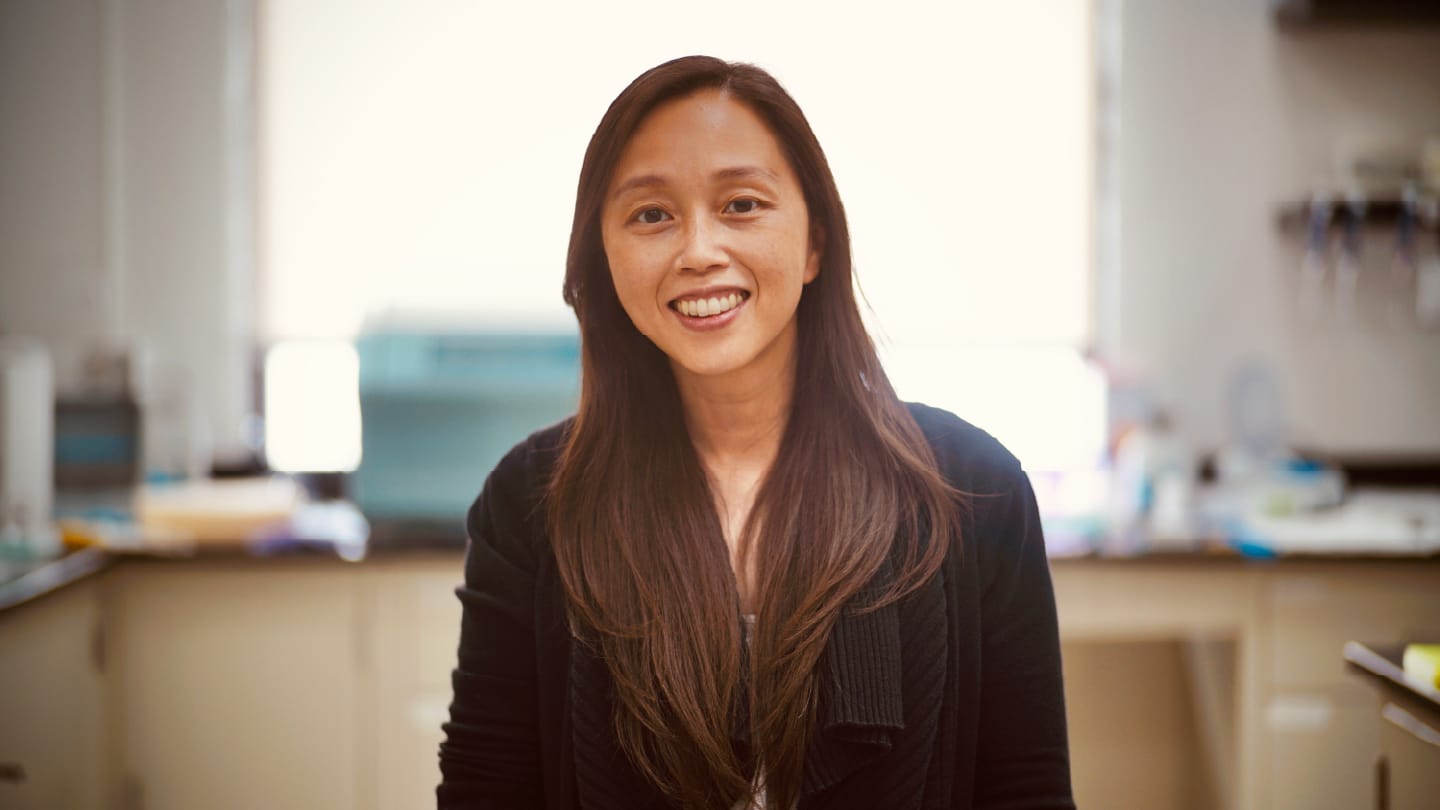
Drawn early on to hands-on problem-solving, Christina Fan, PhD, found herself less interested in working within the limits of existing tools and more motivated by the idea of building new ones. That instinct has shaped a career spanning digital PCR, non-invasive prenatal testing, and, more recently, the founding of Countable Labs. The company’s latest platform, Countable PCR, took first place in The Analytical Scientist Innovation Awards 2025.
Here, Fan reflects on the moments that defined her journey, the mindset behind her work, and why imagining success is often the first step toward achieving it.
Did you always want to work in science, or was that something you decided later?
My interest was shaped by my family – my parents are both physicians – so from a young age I thought I might become a medical doctor. But my father encouraged me to not go down that path, due to the nature of the challenges and stresses involved.
When I applied to college, I came across biomedical engineering. I didn’t really know what the degree entailed at the time, but I applied and ended up pursuing it. During my sophomore and junior years, I had the opportunity to perform research projects, and I really enjoyed this – especially the hands-on, problem-solving aspect.
That experience led me to apply to graduate programs in bioengineering. I went on to complete my master’s and PhD at Stanford University. I was really intrigued by the research focuses of Dr. Stephen Quake’s lab in the Bioengineering Department. The Quake Lab pioneered microfluidic devices to miniaturize reactions and increase throughput, enabling new regimes of biological discovery and associated applications.
I was fortunate to join the lab, which became a major turning point in my career.
When did you make your first significant discovery? Was that early in your career?
Yes, I would say that happened quite early on, during my rotation with Stephen Quake. At the time, he was interested in cell-free DNA and its potential for prenatal screening, having experienced firsthand how stressful procedures like amniocentesis can be for expectant parents.
During my rotation, we started working with digital PCR, which was just becoming commercially available. Fluidigm – co-founded by Dr. Quake – had developed microfluidic devices that enabled this kind of digital counting, and I was among the early users of those systems. We applied this to chromosome counting, where I was able to show, for example, a three-to-two ratio – three copies of chromosome 21 versus two copies of another chromosome – in amniocentesis and CVS samples.
This was really the beginning of using molecular counting for precise biological measurement. Around the time, there had been discoveries showing that fetal DNA circulates in the mother’s bloodstream, but fetal DNA is highly fragmented and mixed with a large background of maternal DNA. The key question was whether it would be possible to detect a small excess of chromosome 21 sourced from the fetus, within a mixture sourced from a sample from the mother.
To address this, we combined digital counting with emerging next-generation sequencing technologies – at the time, platforms like Solexa (now Illumina) and 454 had just emerged. We used a shotgun sequencing approach, sequencing any pieces of DNA in the maternal plasma sample and then using counting and statistics to detect the small excess of chromosome 21 fragments from trisomy 21 fetuses.
We demonstrated success with this approach, and we published the results in 2008. That became the basis for what is now known as non-invasive prenatal testing (NIPT). Later, similar concepts were extended into liquid biopsy applications, including cancer detection and monitoring.
What key lessons did you take from that discovery? Did it shape how you approach scientific problems?
Yes, I think one important aspect was perspective. At the time, much of the cell-free DNA field was driven by clinical groups, who were largely limited to the technologies available to them – mostly qPCR.
Coming from more of a technology background, and working with Dr. Quake, we approached the problem differently – more from a mathematical or physics perspective. We thought about the problem in terms of counting: how do you quantify very small differences, and what tools do you need to make that possible?
That led us to use – and in some cases develop – technologies that weren’t typically being applied in that space. So rather than being constrained by existing methods, we focused on what was fundamentally needed to solve the problem, and then worked backwards to identify or build the right tools.
At the same time, collaboration was essential. We worked closely with clinical groups, including the OB-GYN department at Stanford, to ensure that what we were developing could actually work in a real-world setting.
I think the main lesson was about the value of looking at problems from a different perspective – bringing in tools and ways of thinking from outside the immediate field, and being willing to be a bit more creative in how you approach a challenge.
What led you to move into the commercial side and start setting up companies?
Dr. Quake advised me to apply for an assistant professorship when I graduated. But at the same time, he was also very entrepreneurial – he founded several companies himself. Early on, I was involved with one of those companies, Fluidigm, and I also spent time working at one of his startups.
I think the reason I moved toward industry is that I wanted the work I was doing to be available to more scientists. In academia, the goal is often publishing and generating new ideas, but many times the work stops at the publication, and access to new technologies is limited.
For a technology or tool to actually work in practice – and to be ready for commercial use – there’s a lot more development and additional innovation needed. So that’s what drove me to move toward commercialization of technologies: to take those ideas further and make them broadly accessible to the scientific community.
Was that transition difficult, or did it feel like a natural progression from academia to industry?
I think it depends on the stage of the company. In the early stages, companies feel quite similar to academia – there’s a lot of tinkering, a lot of invention. I was fortunate to work across several companies with strong support and a lot of freedom to focus on early innovation.
But at later stages, it becomes very different from an academic environment. The focus shifts to making products robust and scalable. You go through a full development pipeline that you don’t really see in academia – design input, design output, rigorous testing, validation, verification, manufacturing transfer.
You also have to think about customer support, training commercial teams, product messaging, and getting the technology out into the world. It becomes a completely different set of problems to solve. This brings more pressure – tight timelines, resource constraints, and the realities of building a business. But ultimately, all of that is necessary to get the technology into the hands of users.
What was the founding mission behind Countable Labs?
Going back to my PhD, we were using technologies like digital PCR and next-generation sequencing for counting. NGS is very powerful and has enabled a lot of clinical applications, but it also requires significant infrastructure. The instruments are expensive, you need informatics support, cloud computing, and bioinformatics expertise – and everything is quite centralized. Samples often have to be sent to core facilities or specialized labs, so the turnaround time can be long.
Even though the cost per base has come down, you still need to batch samples to achieve that efficiency, which adds further delay.
I’ve always liked PCR-based technologies because they are fast – you can get results within an hour or two. I saw a lot of potential in digital PCR, but after the early platforms, the field seemed somewhat limited in terms of dynamic range. Some systems could count hundreds or thousands of molecules, which was a big advance, but they still didn’t have the range of what could be studied with NGS. As a result, the applications of digital PCR remained relatively niche.
Throughout my career, I kept coming back to the idea that there was a need for something faster and simpler than NGS, but with a similar ability to count – at least for a smaller number of targets.
That was really what motivated the formation of Countable Labs.
At one point, you decided not to keep making incremental improvements to existing digital PCR technologies, but instead to build something new from the ground up. Was that a difficult decision – and what led you to it?
Over time, different techniques for digital PCR emerged, but they were all roughly equivalent in their capabilities. I started to realize that innovating off of existing platforms would only lead to incremental improvements, and that these approaches could never achieve what was necessary to enable dynamic range performance equivalent to NGS. In order for it to be adopted, it’d also need to be faster, and without the informatics burden.
We had to think more outside the box about how to do counting using PCR, without being confined by the way others had approached it. If you look back, many of the companies in this space were using droplets and a 1D serial readout, or 2D layout involving wells or other microfluidics elements, and those formats fundamentally limited what the technology could achieve in terms of performance.
At that point, we had to step back and think more fundamentally – really from first principles – about what technology would be needed to build a system that could deliver the kind of counting capability, or counting equivalence to NGS, that we were aiming for.
It sounds like quite an engineering-led mindset – going back to first principles to solve the problem. Is that how you approached it?
Yes, I think so. For us, it was really about defining our angle first. We wanted to develop a platform that is PCR-based but capable of counting large numbers of molecules, and also capable of handling a meaningful number of targets – especially for clinical applications and day-to-day research.
We weren’t trying to replicate NGS as a full discovery tool, where you can sequence everything. Instead, we were focused on a more targeted approach – where you already know the set of markers you’re interested in. Not just one or two, but maybe tens of targets. The question was: is there a PCR-based solution that can handle that?
From there, we worked backwards and asked what technologies or components we would need to bring together to achieve the necessary performance.
Are there other mindsets or approaches you think are key to scientific innovation?
Yes – I often tell my team that you have to imagine that you’re going to succeed. From the beginning, we imagined building a platform with the capability to count large numbers of molecules simultaneously.
I think it’s important not to face a problem by thinking that “this is going to fail,” because once you have that mindset, it becomes very difficult to work toward a solution. If, instead, you picture the outcome you want – coming out of the lab with the positive results you’ve aimed for – then naturally you start working toward that goal and finding ways to make it happen.
A lot of success really comes down to maintaining that positive mindset. At the same time, we were also fortunate in the early days to have some stability and support from the other co-founders, which meant we weren’t under immediate financial pressure. We had a small, nimble, and talented team, and the space to treat the problem as an intellectual challenge, rather than something driven by short-term constraints.
That gave us the freedom to explore and persist. Of course, things are different now – the company is larger, and the focus is more on execution and delivering to customers – but that early mindset was very important.
What impact do you hope Countable Labs’ technology will have over the next 5–10 years? What’s the bigger vision?
The Countable PCR platform can do a lot of things. From a PCR perspective, we’re designing it as a platform technology – something that could eventually become as widely used as qPCR in labs. That’s more of a long-term vision, maybe 10–20 years out, particularly in the research space.
In the nearer term, over the next few years, our focus is on applications in clinical testing, environmental monitoring, and areas like cell and gene therapy – especially in manufacturing, where there’s a more immediate need.
In the clinic, for example, NGS has enabled many important applications in areas like oncology and prenatal testing. But because of the infrastructure requirements, samples often have to be sent to centralized labs, and the data analysis can be complex. Even though everything is sequenced, not all of that information is necessarily useful or clinically relevant.
With Countable PCR, we see an opportunity to offer a more decentralized approach – an instrument that can perform some of the same types of tests as NGS, but without the same infrastructure and informatics burden.
The idea is to place these systems directly in clinical labs, and eventually in major hospital labs, so that tests can be run locally. We envision our technology being used in similar ways as qPCR but with the ability to deliver the more precise, targeted measurements that are currently associated with NGS.
That would allow clinicians to run tests more easily and return results to patients much faster. So in the next 5–10 years, that’s really the focus – and longer term, broader adoption in general research use.
How do you balance developing new tools with ensuring existing technologies have real impact?
I think, intellectually, I would always like to have an innovation-focused group – continuing to develop new technologies. But in practice, there’s often a need to balance this with other focuses in the company.
We already have a tool with a lot of potential applications, and that in itself can lead to further innovation. There’s still a lot of work to be done in developing and applying it.
I’ve been fortunate to work to develop technologies alongside mentors who have been involved in major advances. In addition to Dr. Quake, I have worked alongside Dr. Stephen Fodor, the inventor of the Affymetrix DNA microarray and seasoned executive, on two prior life science tool companies, in addition to Countable Labs.
Each of the advances in life science tools made by the technology innovators enabled the scientific community to approach their scientific problems differently. For example, the development of DNA microarrays enabled entirely new types of studies, like genome-wide association studies, uncovering genetic relationships with complex diseases. Then there was next-generation sequencing, followed by single-cell sequencing, and spatial technologies; each of these created new waves of scientific discovery and clinical applications.
I’ve been lucky to be part of some of those transitions. I think there’s a lot to be done with the current technology we are developing at Countable Labs. But at the same time, I’m always interested in what the next tool might be.
Nominations are now open for The Analytical Scientist Innovation Awards 2026. Have you developed, launched, or used a technology that deserves recognition? Submit your nomination here.
Newsletters
Receive the latest analytical science news, personalities, education, and career development – weekly to your inbox.