“I have practiced karate since I was five years old, and this martial art has taught me discipline, commitment, perseverance, and how to perform under stressful situations and pressure. In many ways, the values I learned through karate have also guided my scientific career.”
What does your research focus on, and what problem are you trying to solve?
Currently, my research focuses on two main areas. The first is the development of novel methodologies and instrumental setups for advanced analytical platforms, such as comprehensive two-dimensional liquid chromatography (LC×LC), to overcome separation challenges associated with highly complex and unknown samples. The second focuses on integrating green extraction, encapsulation, bioactivity assessment, and chemical characterization to develop sustainable biorefinery strategies and generate robust knowledge for the valorization of underutilized food biomass.
What aspect of your current research excites you most – and why is this an important moment for it?
One of the topics I am most passionate about is demonstrating the enormous potential and practical applicability of advanced analytical techniques such as LC×LC.
Although LC×LC is a powerful analytical tool that offers exceptional separation power, it is still far from being routinely employed in analytical laboratories. Over the last few years, significant efforts have been devoted to developing a solid theoretical foundation for this technique. Today, this accumulated knowledge, together with the availability of commercial instrumentation, opens the door to transforming LC×LC from a highly specialized and seemingly unattainable methodology into a practical and accessible analytical tool.
Throughout my career, one of my main goals has been to provide applications, strategies, and solutions that make LC×LC more accessible to the analytical community. Contrary to common perception, LC×LC is an extremely versatile technique that can be tailored through different configurations to create customized analytical solutions for specific challenges.
In particular, I am highly interested in the application of LC×LC to food quality and authenticity studies. The globalization of food supply chains and the increasing value of premium food products have contributed to a rise in food fraud. Consequently, considerable research efforts are currently focused on developing analytical tools capable of detecting and preventing fraudulent practices through the identification of authenticity markers, such as geographical origin, varietal differentiation, and product provenance.
In this context, LC×LC represents a particularly valuable approach because it can generate highly comprehensive metabolic fingerprints of food samples, revealing distinctive patterns that define their authenticity and enable their differentiation from lower-value or adulterated products.
Nevertheless, despite its outstanding resolving power, LC×LC alone is not sufficient to address this complex challenge. Combining LC×LC results with future advances in data processing and emerging artificial intelligence and sensor technologies has the potential to provide powerful and reliable solutions for detecting and preventing food fraud, particularly in products with differentiated quality attributes.
Looking five to 10 years ahead, what emerging trend do you think will have the greatest impact on analytical science?
Without any doubt, artificial intelligence. In just a few years, AI has already transformed many aspects of analytical science. For example, it is increasingly being used to simulate and model method development, optimize experimental conditions, and extract meaningful information from highly complex datasets. Its impact on data generation, processing, and interpretation is allowing researchers to obtain insights that would have been difficult, or even impossible, to achieve using traditional approaches.
And this is only the beginning. I believe AI will deeply change the way we generate, analyze, and use scientific data. As analytical technologies continue to produce larger and more complex datasets, AI will become an essential tool for fully exploiting their value. It will enhance our ability to accelerate scientific discovery and translate analytical results into practical applications far beyond what is currently possible.
What is the biggest challenge facing analytical science today?
This answer is closely related to the previous one. Although AI is opening the door to a new era in analytical science, the main challenge is ensuring that we are prepared to take full advantage of it.
Most analytical scientists are trained in highly specialized areas of chemistry, yet we often have limited experience in data science, programming, machine learning, and other computational disciplines. As a result, there is a significant gap between our traditional expertise and the computational skills required to implement AI-driven approaches effectively.
Moreover, analytical chemists are used to understanding the fundamental principles behind our methods and results. For most of us, many AI models are perceived as “black boxes,” making it difficult to understand fully how predictions or decisions are generated. Another important challenge is that robust AI models require large amounts of high-quality, consistent, and well-annotated data. However, we often generate heterogeneous datasets during our experiments, obtained from different instruments, platforms, and experimental conditions, resulting in diverse data formats and structures.
To overcome these challenges, closer collaboration between analytical scientists and computational experts will be essential. In addition, the development of more user-friendly AI tools, together with greater efforts toward data standardization and harmonized acquisition protocols, will facilitate the integration of AI into routine analytical workflows.
Do you have any strong opinions with which the rest of the field tends to disagree?
Nowadays, there is an increased emphasis on developing short and ultrafast analytical methods. Today, it is common to find methods that describe the identification of dozens of compounds within very short periods, sometimes less than 10 minutes.
While I fully recognize the value of these developments, I believe that analytical speed should not become an objective in itself. Instead, there should be a balance between the analytical questions being addressed and the level of information required to answer them.
For applications such as the targeted determination of toxic contaminants, hazardous or banned substances, and similar compounds, rapid analytical methods are essential. Their high throughput and easy implementation make them particularly suitable for routine laboratory controls, interlaboratory methods, and regulatory agencies. However, when the objective is to obtain the maximum amount of information about a complex sample, the only way to do so is to apply longer analysis times, using long chromatographic columns, extended gradients, and even multidimensional techniques that enhance resolution. These approaches make it possible to detect low-abundance compounds, resolve critical coeluting compounds, and reveal chemical information that would otherwise remain hidden if rapid analyses were applied.
What decision, opportunity, or unexpected event has had the greatest influence on your career so far?
The event that most significantly shaped my career was the introduction of LC×LC in Spain by Dr. Miguel Herrero of the Foodomics Laboratory at the Institute of Food Science Research, CIAL-CSIC, Spain. After spending time in the laboratory of Prof. Luigi Mondello at the University of Messina, Italy, he established a research line focused on applying LC×LC methods to the chemical characterization of food. Dr. Herrero was a pioneer in introducing this powerful technology in Spain and has become a well-recognized expert in the field.
I was fortunate to join the Foodomics Laboratory in 2011, shortly after he returned from Messina. Together with Dr. Elena Ibáñez, we focused on applying LC×LC methods to food samples and extended the use of this technique to food quality, including the differentiation of food varieties and the authentication of products with protected designation of origin (PDO).
Another major influence on my career was the five-year postdoctoral period I spent in the laboratory of Prof. Oliver Schmitz at the University of Duisburg-Essen in Germany. During this time, I had the opportunity to contribute to important advances in 2DLC data processing with Dr. Sven Meckelmann, as well as develop new ideas and improvements for LC×LC configurations. Two of our most notable contributions were the creation of a “demodulation” tool to transform 2D data into a 1D matrix and the development of the so-called “multi-2D LC×LC” configuration.
In summary, my career has been full of exceptional opportunities guided by outstanding researchers who have profoundly influenced my scientific development.
What interest or skill outside science has made you a better researcher?
I have no hesitation in answering this question. I have practiced karate since I was five years old, and this martial art has taught me discipline, commitment, perseverance, and how to perform under stressful situations and pressure. In many ways, the values I learned through karate have also guided my scientific career.
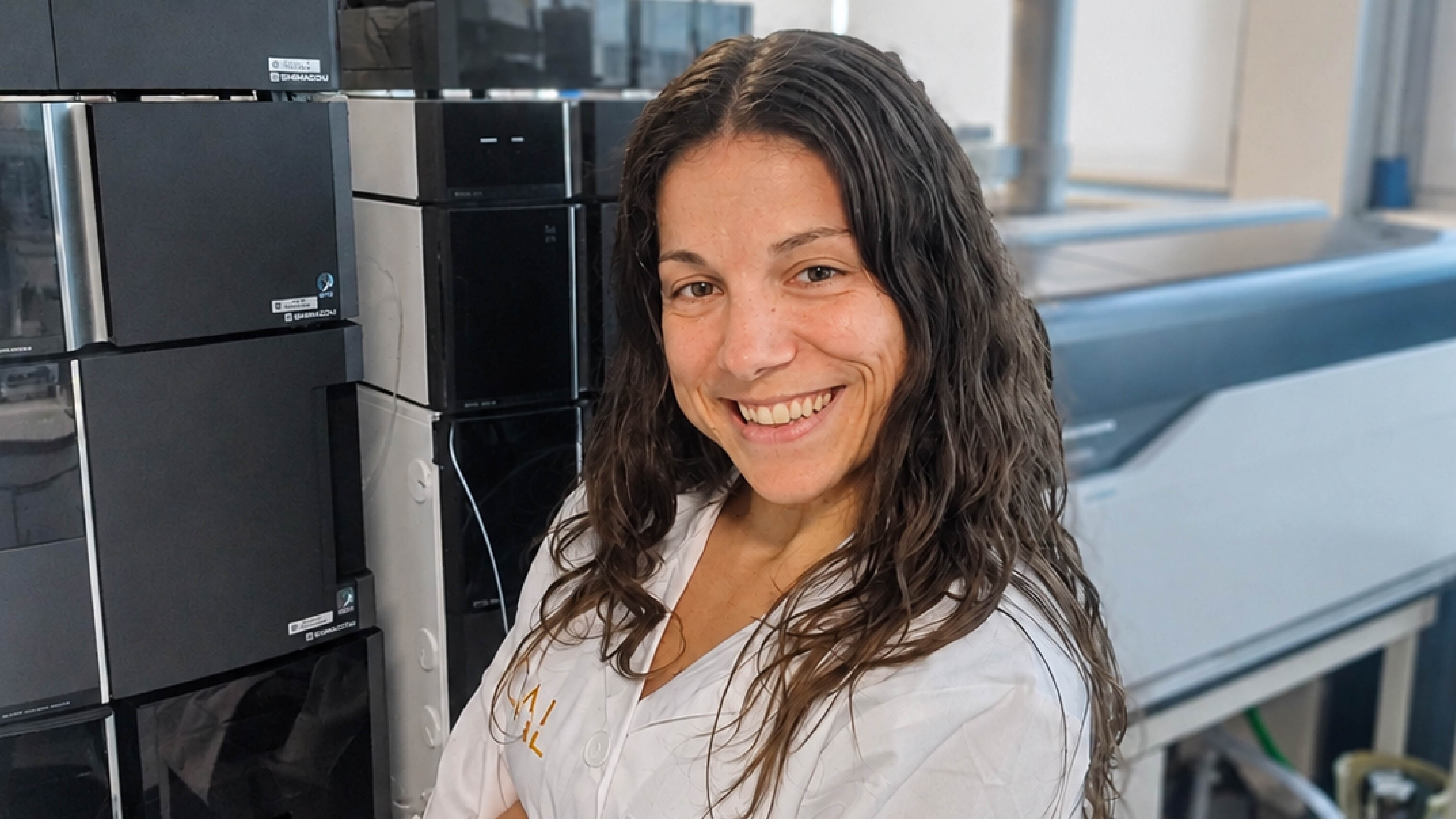
Lidia Montero is a Tenured Scientist in the Foodomics Laboratory at the Institute of Food Science Research, Spanish National Research Council (CIAL-CSIC), Spain.
Explore The Analytical Scientist 40 Under 40 Power List 2026
Newsletters
Receive the latest analytical science news, personalities, education, and career development – weekly to your inbox.