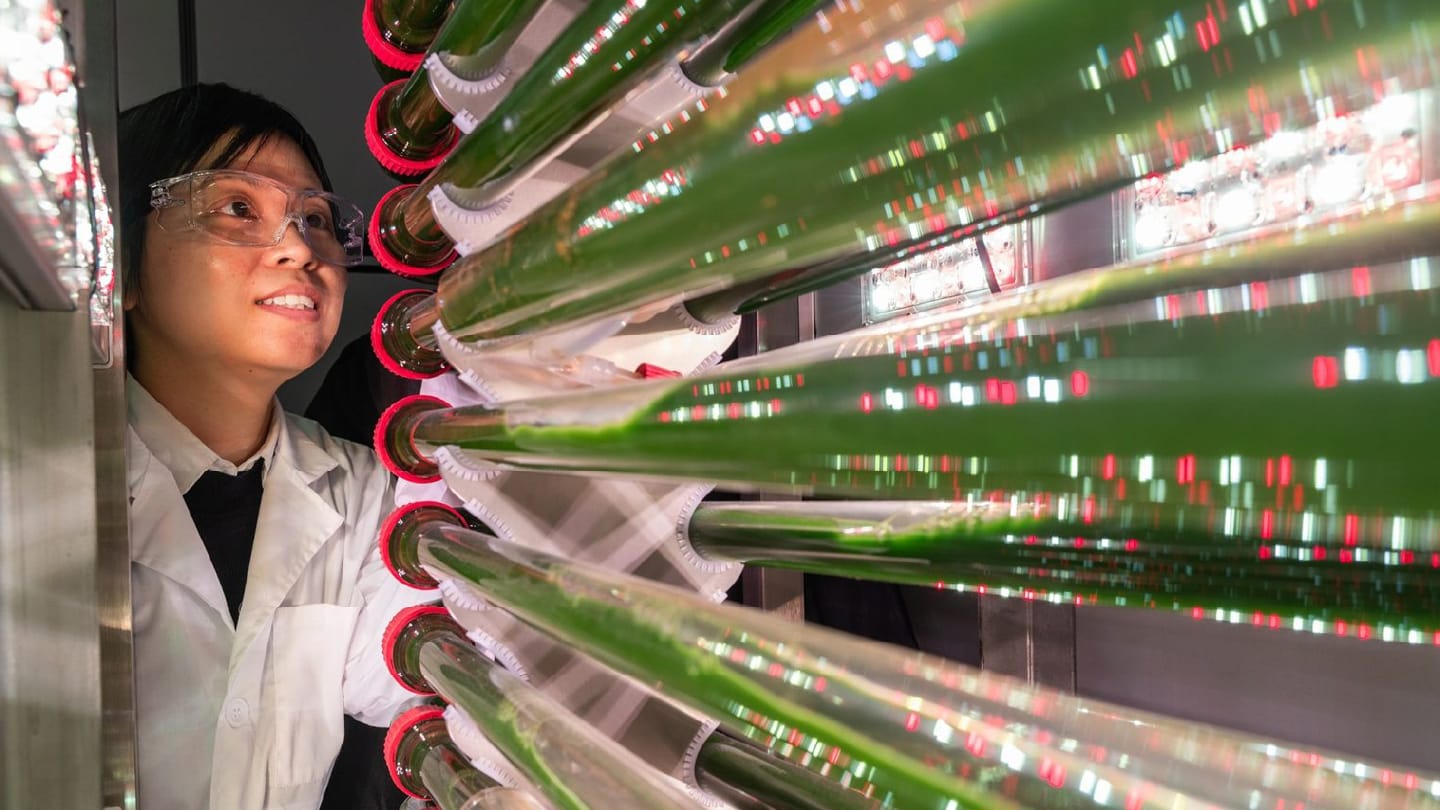
A novel strain of algae genetically tailored to bind and sequester microplastics could transform how we clean polluted water. In a recent study, University of Missouri engineers led by Susie Dai modified algae to produce limonene – a naturally occurring, water-repellent oil. This trait causes the algae to attract and clump with similarly water-repellent microplastic particles in wastewater, forming dense biomass that sinks and can be easily harvested.
Microplastics, pervasive contaminants found from rivers to drinking water, typically evade capture in conventional wastewater plants due to their tiny size. Dai’s engineered algae not only captures these particles but also thrives on excess nutrients in wastewater, simultaneously improving water quality as it grows. The interaction and removal process was confirmed using a combination of microscopy, thermogravimetric analysis, and Raman-based chemical imaging. The processed biomass, containing collected microplastics, could be repurposed into benign bioplastics, offering a dual benefit of remediation and upcycling.
Newsletters
Receive the latest analytical science news, personalities, education, and career development – weekly to your inbox.